
Understanding ERP inventory management limitations is essential for industrial organizations looking to improve inventory accuracy, field visibility, and overall operational efficiency. Enterprise Resource Planning (ERP) systems serve as the core transactional backbone for business operations, yet they were never architected to provide real-time tracking of material movements across complex environments like warehouses, stockyards, maintenance bays, laydown areas, and remote operational sites.
As industrial footprints expand across multiple geographic locations, relying strictly on ERP systems creates critical operational blind spots. Delayed system updates, manual data entry, restricted field access, and siloed inventory records make it difficult for maintenance, procurement, warehouse, and operations teams to make informed, timely decisions.
To bridge this gap, forward-thinking industrial organizations complement their core ERPs with dedicated Inventory Intelligence Platforms. Rather than replacing the ERP system, these platforms extend enterprise capabilities by introducing real-time material tracking, mobile inventory management, RFID technology, IoT sensor integration, and actionable operational analytics.
ERP platforms excel at managing high-level business workflows, including financial accounting, procurement planning, purchase orders, sales processing, and general ledger inventory balances. They establish a centralized database that maintains organizational consistency across corporate departments.
However, a fundamental limitation of ERP inventory management lies in its complete reliance on accurate, timely, and manual transaction logging. ERP systems record data that users submit after the fact, but they rarely verify physical inventory events occurring on the shop floor or in the field.
When materials shift without immediate logging, when maintenance technicians issue parts during emergency repairs and delay system updates, or when stock transfers between remote sites lack real-time digital entry, the ERP displays outdated inventory levels. Over time, these cumulative delays create severe discrepancies between recorded data and physical reality, disrupting maintenance scheduling, procurement accuracy, and asset utilization.
For capital-intensive sectors operating across distributed facilities, underground mining yards, active construction zones, and off-grid sites, these tracking gaps become increasingly difficult to manage as operational volume grows.
Achieving true real-time visibility remains a key hurdle for standard ERP architectures due to the reliance on post-execution data entry.
In a typical ERP workflow, administrative personnel enter transactions hours or days after physical activities wrap up. While this retrospective logging satisfies high-level financial reporting, it fails to capture actual conditions on the ground.
During these operational lags, system records present an inaccurate picture of stock availability. Without live tracking, industrial operations face extended material search times, duplicate orders, unexpected stockouts, and costly pre-job manual verifications before maintenance crews can begin work.
An ERP system functions effectively as a static system of record, but it lacks the infrastructure needed for dynamic, real-time material execution.
Industrial materials are in constant motion: spare parts flow to maintenance bays, heavy machinery rotates across site locations, consumables arrive directly at project gates, and materials store in expansive outdoor yards. Tracking these dynamic movements requires edge technologies designed to operate directly where work happens.
Standard ERP systems generally lack native, out-of-the-box support for essential field capabilities:
Because standard ERPs lack these operational tools, time lags between physical movements and digital entries remain inevitable, reducing overall data accuracy.
Your ERP is designed to manage business processes. Discover how Scatterlink extends ERP capabilities with real-time inventory visibility and actionable inventory intelligence.
The downstream operational effects of ERP inventory gaps extend far beyond central warehouse walls, impacting productivity, safety, and operational costs across the enterprise.
When inventory records are inaccurate or delayed, maintenance plans stall because crews cannot find required spare parts. Procurement teams end up purchasing redundant inventory that sits hidden elsewhere in the company. Warehouse teams spend valuable hours verifying physical counts before releasing stock, while plant managers make strategic decisions using incomplete data.
These systemic inefficiencies lead to clear financial and operational bottlenecks:
An Inventory Intelligence Platform is purpose-built to deliver real-time operational visibility into asset location, movement, availability, and usage across distributed environments. Unlike an ERP that records financial and business transactions, an inventory intelligence layer captures physical events instantly at the point of action.
The fundamental distinction lies in their primary function:
For organizations managing complex operations across warehouses, laydown yards, offshore platforms, and remote field sites, these operational answers directly influence daily uptime and throughput.
Your ERP records inventory transactions. Scatterlink helps you understand what is happening between those transactions. Discover how real-time inventory intelligence improves operational decision-making.
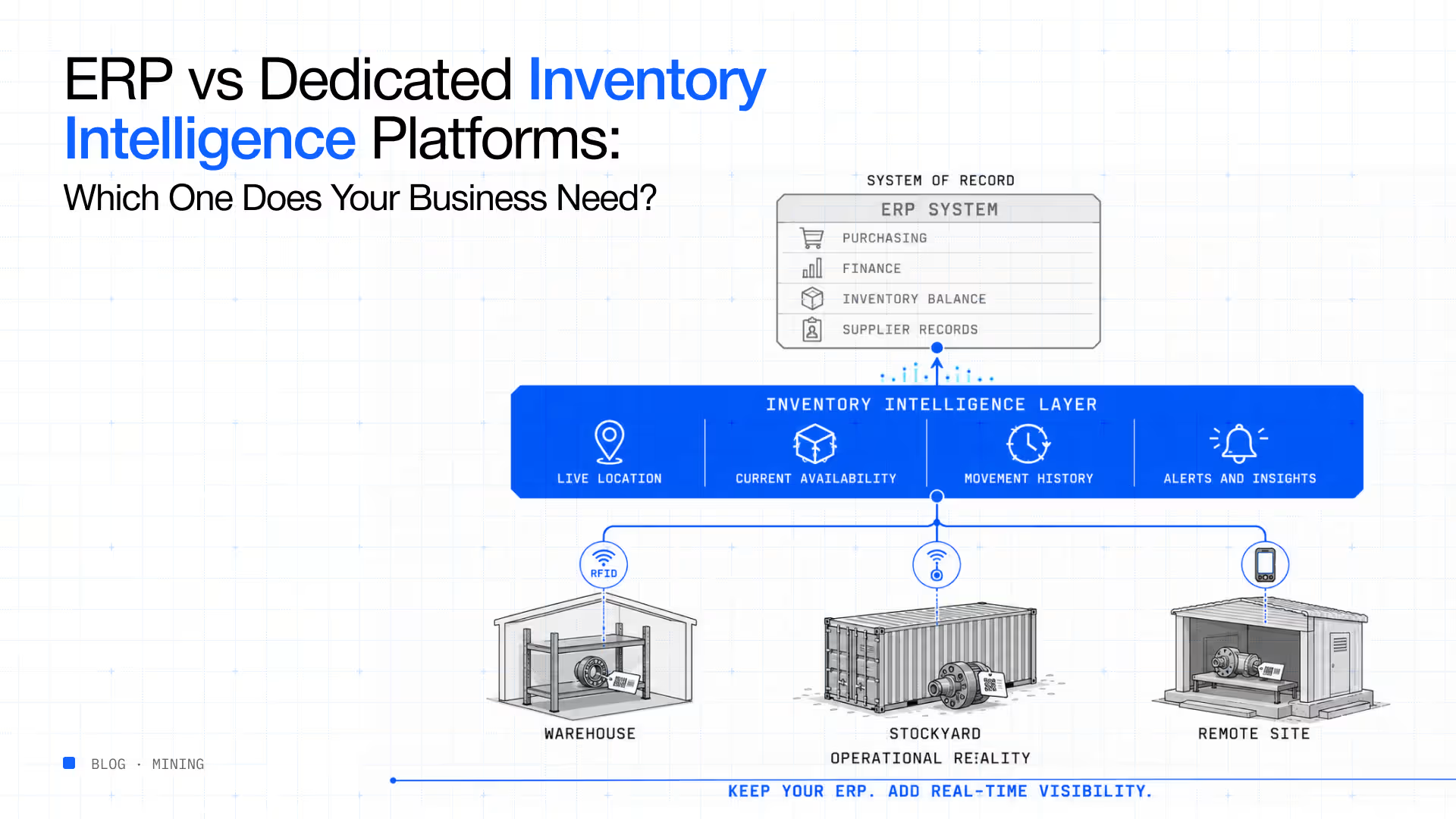
Leading industrial organizations no longer view ERP platforms and Inventory Intelligence Platforms as competing tools. Instead, they leverage them together in a complementary architecture.
In this model, the ERP retains its position as the ultimate system of record for corporate accounting, purchasing, supplier management, and enterprise finance. Simultaneously, the Inventory Intelligence Platform acts as the operational execution layer, gathering physical asset data in real time and syncing clean, validated records back to the ERP.
This hybrid approach ensures field operations run smoothly without sacrificing corporate financial control. Systems capture inventory data automatically during daily workflows, improving record accuracy while removing manual data entry burdens from technicians and warehouse personnel.
Relying solely on ERP data means making operational choices using historic transaction logs. Real-time inventory intelligence transforms this approach by collecting, organizing, and analyzing field data as events happen.
Rather than providing static stock counts, an intelligence platform surfaces actionable operational insights across key metrics:
These insights allow maintenance planners to schedule jobs with confidence, empower procurement teams to streamline spend, and help managers fix process issues before they affect site productivity.
Scatterlink operates on a simple design philosophy: Keep your existing ERP system, but make it smarter.
Rather than forcing organizations through expensive system replacements, Scatterlink's Inventory Intelligence Platform integrates directly with leading ERPs to provide the frontline visibility enterprise tools lack.
By combining active and passive RFID, 1D/2D barcode processing, IoT sensor data, offline-first mobile workflows, GPS location mapping, and smart analytics, Scatterlink tracks material movements across warehouses, outdoor laydown areas, workshop floors, and off-grid operations.
Every physical movement updates automatically across the system. Maintenance technicians, warehouse staff, procurement managers, and plant supervisors work from a single, trusted source of truth. Built specifically for frontline field teams, the interface requires minimal training, accelerates daily transactions, shortens search times, and maintains clean data integrity without adding administrative overhead.
ERP platforms remain vital systems for modern business management, but they were not built to provide real-time, line-of-sight tracking across dynamic industrial environments. Recognizing these structural limits allows industrial teams to keep their core ERP for business logic while adding specialized tools where operations demand them.
By combining the financial control of an ERP with real-time technologies like RFID, mobile tools, GPS, and operational intelligence, industrial organizations establish accurate data streams that speed up maintenance execution, refine procurement spend, and protect overall operational uptime.
Extending your ERP with an operational intelligence layer converts raw inventory tracking into a reliable driver of efficiency, safety, and cost control across your entire supply chain.
Looking to overcome ERP inventory management limitations? Discover how Scatterlink complements your existing ERP with real-time inventory visibility, RFID-enabled tracking, and actionable inventory intelligence.
ERP inventory management limitations include delayed inventory updates, limited real-time inventory visibility, dependence on manual data entry, limited support for field operations, and difficulty tracking inventory movement across multiple locations.
Most ERP systems provide inventory records based on completed transactions, but they typically do not capture inventory movement in real time. Organizations often use RFID, mobile inventory applications, and Inventory Intelligence Platforms to achieve real-time inventory visibility.
An Inventory Intelligence Platform provides real-time visibility into inventory location, movement, availability, and usage by combining technologies such as RFID, mobile inventory management, IoT devices, GPS mapping, and analytics.
No. An Inventory Intelligence Platform is designed to complement an ERP, not replace it. The ERP remains the system of record, while the Inventory Intelligence Platform delivers operational visibility and real-time inventory intelligence.
Mining, construction, oil and gas, manufacturing, utilities, ports, logistics, and other asset-intensive industries benefit because they manage inventory across multiple operational locations where real-time visibility is essential.
%20(1).avif)
.avif)
%20(1).avif)