
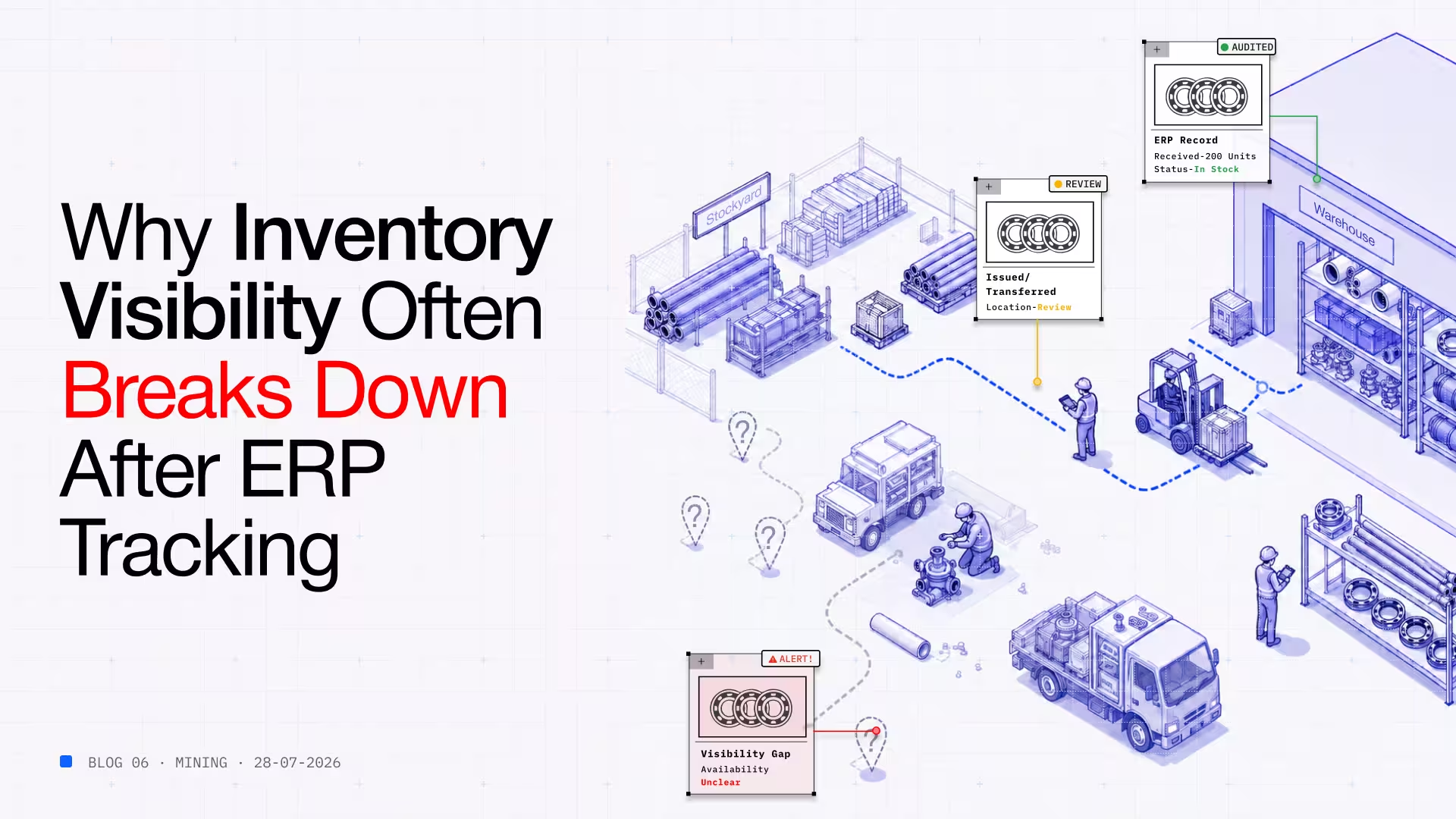
Enterprise Resource Planning (ERP) systems play a critical role in inventory management. They help organizations track purchase orders, record receipts, maintain inventory balances, and provide the financial controls needed to manage inventory across multiple locations. For many organizations, the ERP serves as the system of record for inventory data.
However, inventory tracking does not end when an item is received into storage. In fact, some of the most significant inventory visibility challenges emerge after inventory begins moving through day-to-day operations. Components are transferred between locations, issued to maintenance teams, moved to project sites, partially consumed during repairs, or returned to storage. As these movements increase, maintaining accurate visibility becomes more difficult.
This is where many organizations encounter a critical gap. The ERP may accurately record that inventory exists, but operational teams often struggle to determine where that inventory is located, who is using it, whether it has been consumed, or if it remains available for future work. Over time, this gap between ERP records and operational reality can lead to delays, inefficiencies, and reduced confidence in inventory data.
Stop losing sight of stock after it leaves the warehouse. Extend your tracking capabilities beyond the ERP with Scatterlink’s operational inventory software to monitor real-time stock movements across all your sites.
ERP systems are designed to manage inventory transactions and provide a centralized view of inventory data across the organization. They excel at recording key events such as purchasing, receiving, stock adjustments, and inventory valuation. This information is essential for financial reporting, procurement planning, and inventory control.
For example, when inventory is received into a warehouse, the ERP records the transaction, updates stock levels, and creates an auditable record of the activity. Procurement teams can see inventory balances, finance teams can monitor inventory value, and managers can make informed purchasing decisions based on available data.
These capabilities are invaluable and remain the foundation of effective inventory management. The challenge is not that ERP systems fail to track inventory. Rather, the challenge lies in maintaining visibility after inventory begins moving beyond its original storage location and into operational workflows.
Once inventory leaves storage, it enters a much more dynamic environment.
A replacement component may be issued to a maintenance technician for a planned repair. Inventory may be transferred between warehouses to support a project. Materials may be moved to a laydown yard, a maintenance facility, or a remote work site. In many cases, inventory may be partially consumed, returned, or relocated multiple times before its lifecycle is complete.
These operational movements occur constantly, yet they are often more difficult to capture consistently than receiving transactions.
As a result, organizations can find themselves in situations where inventory records show available stock, while operational teams are uncertain about its actual location or status. The inventory has not disappeared. Visibility into the inventory has.
This challenge becomes even more significant for organizations managing inventory across multiple sites, warehouses, maintenance facilities, or field operations. The more inventory moves, the greater the risk of information gaps developing between system records and day-to-day operations.
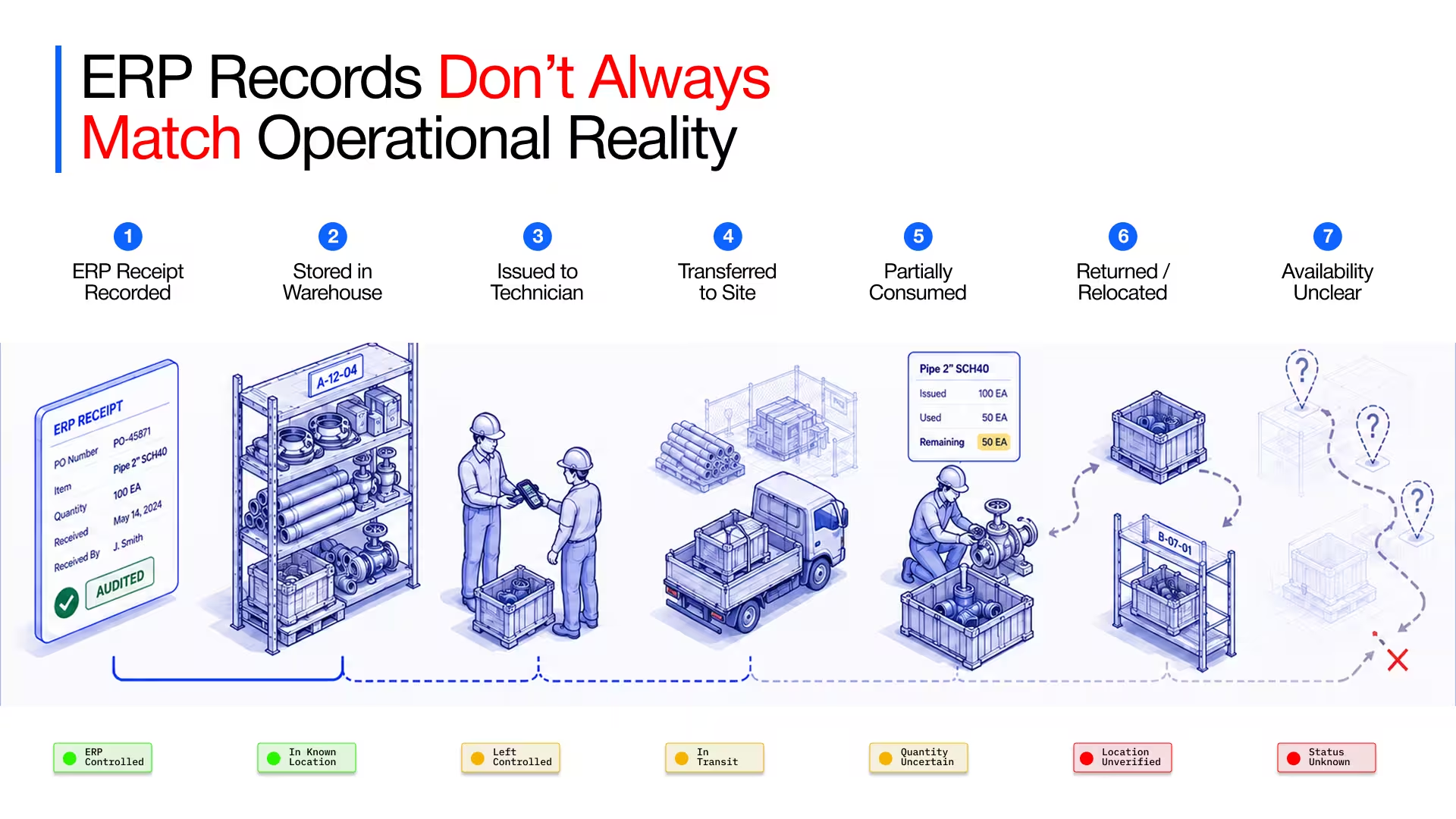
Many organizations invest heavily in tracking inventory up to the point where it enters storage. Far fewer have processes in place to maintain the same level of visibility after inventory is issued for use.
This is often referred to as the "last-mile" inventory tracking challenge.
The issue is not simply knowing that inventory was received. The issue is understanding what happened next.
Without clear answers to these questions, inventory records gradually become less reliable as operational activity increases. Employees begin verifying information manually, searching multiple locations, or relying on institutional knowledge to determine where inventory is located.
Over time, this creates inefficiencies that extend far beyond inventory management itself.
Close the last-mile visibility gap. Discover how Scatterlink brings complete data accuracy and field-level tracking to complex multi-site supply chains.
Visibility throughout the inventory lifecycle is just as important as visibility at the point of receipt.
When inventory visibility declines, organizations often experience a range of operational challenges.
Maintenance teams spend valuable time searching for inventory rather than completing repairs. Procurement teams may reorder items that already exist elsewhere in the organization. Supervisors face delays when inventory availability cannot be confirmed quickly. Warehouse personnel are frequently asked to investigate discrepancies between inventory records and physical inventory locations.
Perhaps most importantly, confidence in inventory data begins to erode.
When employees no longer trust inventory records, they create workarounds. They maintain separate spreadsheets, rely on personal knowledge, make phone calls to verify inventory availability, or order additional inventory as a precaution. These behaviors may solve immediate problems, but they also introduce new inefficiencies and increase inventory costs over time.
The result is a cycle in which inventory data becomes progressively harder to trust, making inventory management more reactive and less efficient.
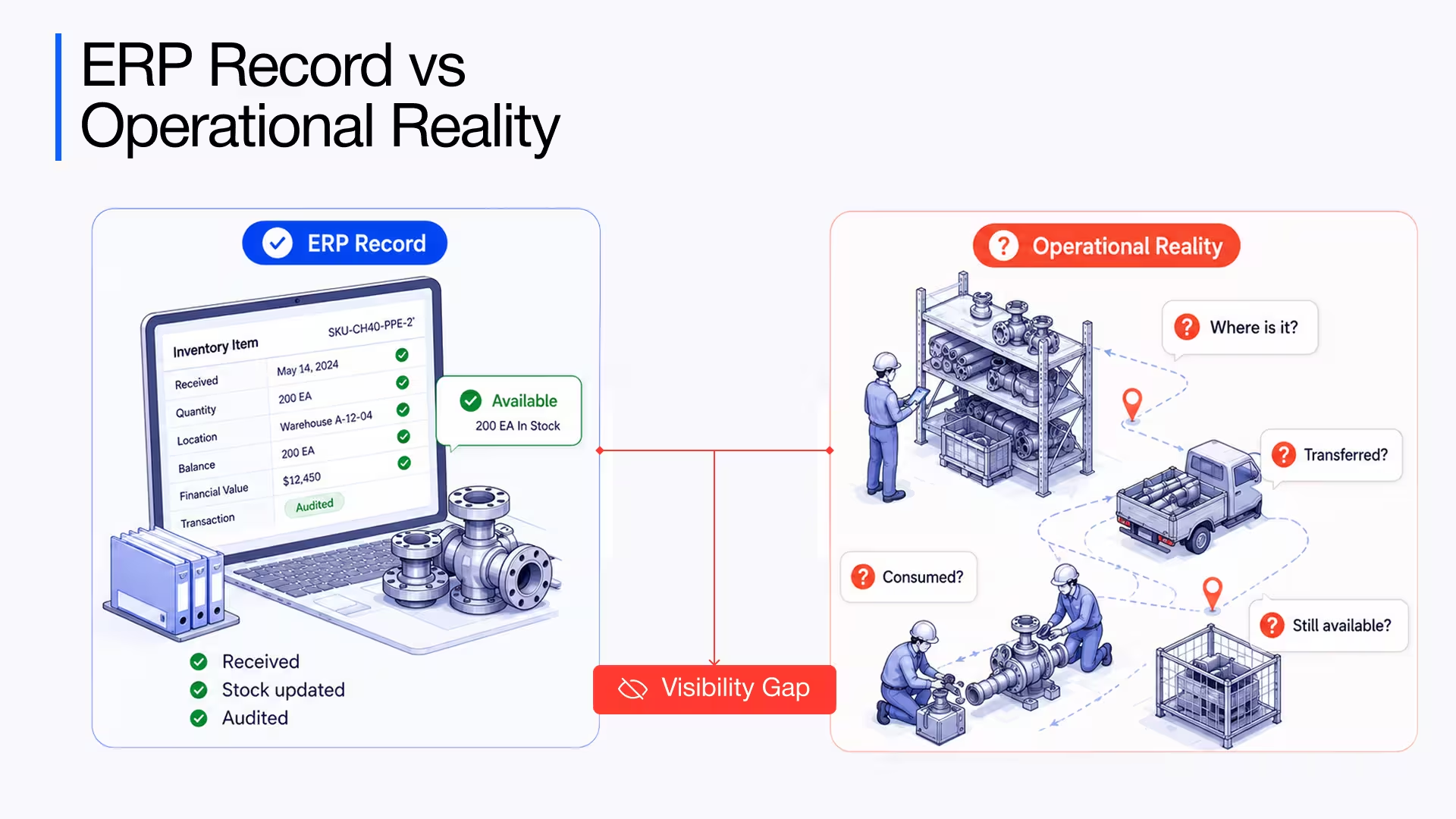
Organizations do not need to replace their ERP systems to solve this problem. In fact, ERP systems remain an essential part of inventory management.
What organizations need is greater visibility into inventory movement after inventory enters operational workflows.
This includes visibility into inventory transfers, issues, consumption, returns, and location changes across warehouses, maintenance facilities, stockyards, and remote sites. By extending inventory tracking beyond the initial transaction, organizations can maintain more accurate inventory records and reduce the disconnect between system data and operational reality.
The goal is not simply to know that inventory exists. The goal is to know where inventory is, how it is being used, and whether it remains available when needed.
Organizations that achieve this level of visibility are often better positioned to improve inventory accuracy, reduce search time, support maintenance activities, and make more informed operational decisions.
Eliminate duplicate orders and costly downtime. Learn how Scatterlink's inventory tracking solution provides cross-facility visibility so your teams always know what's available.
Learn how organizations are extending inventory tracking beyond ERP transactions to improve inventory accuracy, reduce operational delays, and maintain confidence in inventory data throughout the inventory lifecycle.
ERP systems provide the foundation for inventory management, but inventory visibility should not stop at the point of receipt. Once inventory begins moving through maintenance activities, projects, field operations, and multiple storage locations, maintaining accurate visibility becomes significantly more challenging.
The organizations that manage inventory most effectively recognize that inventory tracking is a lifecycle process, not a single transaction. By closing the gap between ERP records and operational activity, they can improve inventory accuracy, reduce inefficiencies, and ensure that inventory remains visible long after it leaves storage.
ERP systems are highly effective at recording inventory transactions such as purchasing and receiving. However, inventory becomes more difficult to track when it is transferred, issued, consumed, relocated, or used across multiple operational environments.
The last-mile inventory tracking gap refers to the loss of visibility that can occur after inventory leaves storage and enters day-to-day operations. Organizations may know inventory was received but struggle to track its movement, usage, and availability over time.
ERP systems can record inventory consumption when transactions are entered. The challenge is ensuring that inventory movements and consumption activities are captured accurately and consistently across operational workflows.
Limited inventory visibility can lead to longer search times, duplicate purchasing, maintenance delays, inaccurate inventory records, and reduced confidence in inventory data.
Organizations can improve visibility by tracking inventory movements more consistently, maintaining accurate location information, and extending inventory tracking beyond initial receipt and storage activities.
%20(1).avif)
.avif)
%20(1).avif)