
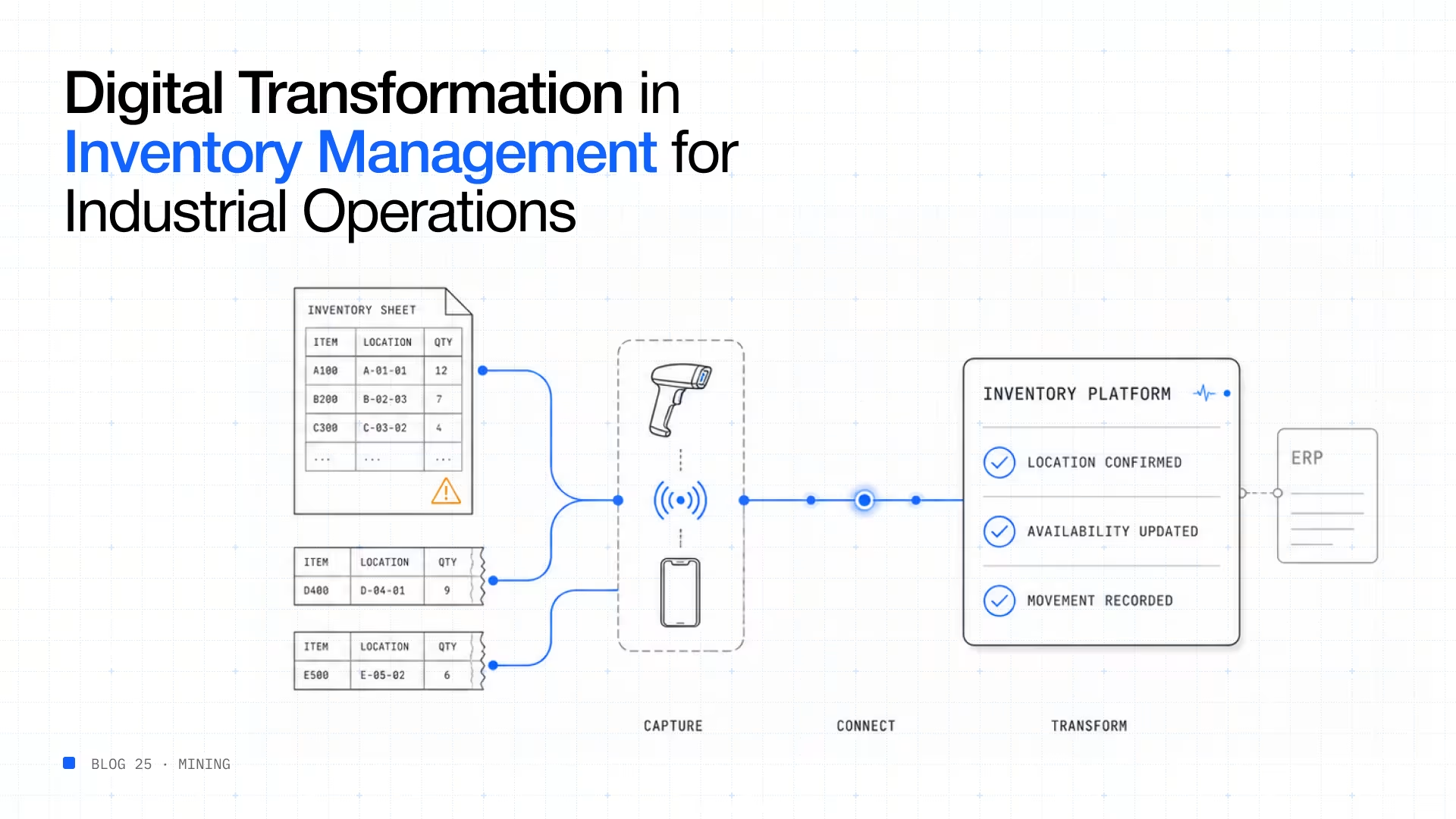
Digital inventory transformation is reshaping how industrial organizations manage inventory across warehouses, stockyards, maintenance facilities, and remote operational sites. As operations become more complex and supply chains more dynamic, manual inventory processes built around spreadsheets, paper records, and delayed system updates are no longer capable of delivering the visibility businesses need.
Without accurate, real-time inventory information, organizations often struggle with inventory discrepancies, duplicate purchases, lengthy inventory searches, and delayed maintenance activities. These challenges increase operational costs while making it harder for procurement, warehouse, and maintenance teams to work efficiently.
Digital inventory transformation addresses these challenges by connecting inventory data, people, and processes through technologies such as RFID, IoT, mobile inventory applications, ERP integration, and inventory intelligence. Rather than simply digitizing records, it creates a connected inventory ecosystem that improves inventory visibility, inventory accuracy, and operational decision-making.
In this guide, you'll learn why traditional inventory processes no longer scale, the technologies driving inventory digitization, and the practical steps industrial organizations can take to successfully implement digital inventory transformation.
Manual inventory processes become increasingly difficult to manage as industrial operations grow in size, complexity, and geographic reach. While paper-based records and spreadsheets may have supported smaller operations in the past, they struggle to keep pace with today's inventory movement across warehouses, stockyards, laydown yards, maintenance workshops, and remote operational sites.
As inventory volumes increase, manual processes create delays in recording transactions, updating stock levels, and communicating inventory movements between teams. Maintenance technicians may issue spare parts before transactions are recorded, warehouse teams may transfer inventory without immediate system updates, and procurement departments may make purchasing decisions using outdated information.
These disconnected processes often result in inaccurate inventory records, duplicate purchases, unnecessary emergency orders, and extended downtime while teams search for critical materials. Over time, the business spends more effort correcting inventory problems than preventing them.
Digital inventory transformation enables organizations to eliminate these manual bottlenecks by capturing inventory activity as it happens, ensuring every department works from accurate, real-time inventory information.
Several warning signs indicate that an organization has outgrown traditional inventory management methods.
One of the most common indicators is declining inventory accuracy. If physical inventory frequently differs from system records, employees lose confidence in inventory data and begin manually verifying inventory before making decisions.
Another common challenge is long inventory search times. Maintenance teams often know a required spare part exists somewhere within the business but cannot determine its exact location. As a result, repairs are delayed while warehouse personnel search multiple storage areas or procurement teams purchase replacement inventory unnecessarily.
Organizations may also experience increasing inventory carrying costs, duplicate purchases across multiple locations, inconsistent inventory records between ERP systems and physical inventory, or slow cycle counting processes.
These operational issues rarely occur because employees are performing poorly. They occur because manual inventory processes cannot provide the speed, visibility, and accuracy required to support modern industrial operations.
Digital inventory transformation is built on a combination of technologies that work together to provide complete inventory visibility and operational intelligence. Rather than relying on a single software application, organizations create an integrated inventory ecosystem where inventory information flows automatically between frontline operations and enterprise systems.
The most widely adopted technologies include:
Together, these technologies improve inventory accuracy, reduce manual effort, and provide real-time inventory visibility across every operational location.
Real-time inventory visibility is one of the most valuable outcomes of digital inventory transformation because it ensures inventory records reflect actual inventory conditions rather than historical transactions.
Instead of waiting for employees to manually update inventory after completing work, inventory movements are captured immediately as they occur. This allows warehouse teams, maintenance personnel, procurement professionals, and operations managers to view accurate inventory quantities, locations, and availability at any point in time.
With real-time inventory visibility, organizations can reduce inventory discrepancies, shorten inventory search times, improve maintenance planning, and make purchasing decisions based on current inventory information rather than assumptions. It also creates greater confidence in inventory records, allowing every department to operate from a single source of truth.
For industrial organizations managing inventory across multiple facilities, real-time inventory visibility is no longer a competitive advantage. It has become a fundamental requirement for efficient operations.
Digital inventory transformation begins with real-time visibility. Discover how Scatterlink helps industrial organizations replace manual inventory processes with connected, intelligent inventory management.
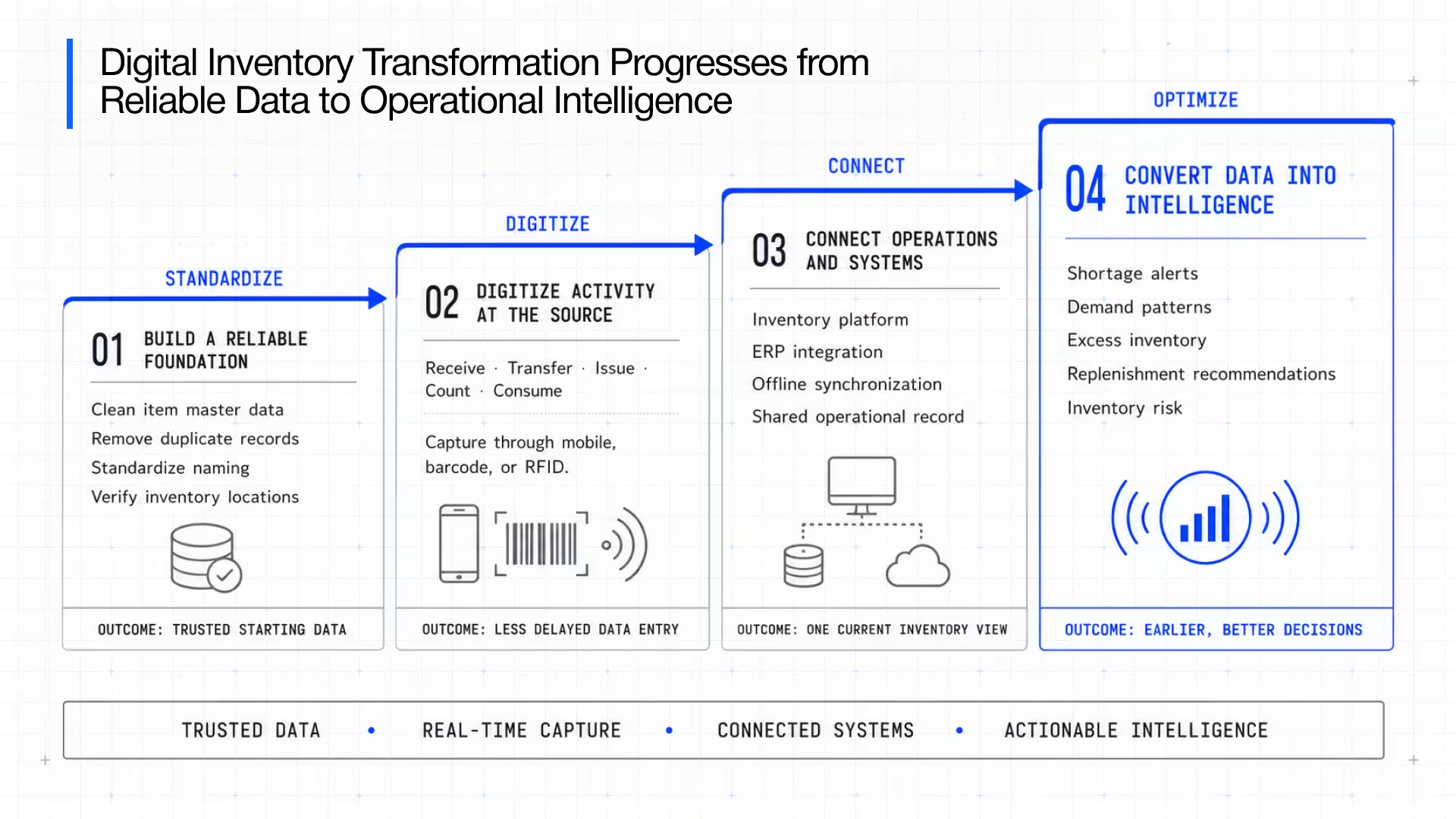
A successful digital inventory transformation begins with improving inventory processes, not simply implementing new technology. Organizations that achieve the best results first evaluate how inventory is received, stored, transferred, issued, and consumed across the business before introducing digital tools to support those workflows.
The first step is to establish a clean and standardized inventory foundation. This includes reviewing item master data, eliminating duplicate records, standardizing naming conventions, and verifying inventory locations. If inaccurate inventory data is transferred into a new digital system, the organization simply replaces one problem with another.
The next step is to digitize inventory transactions at the point of activity. Instead of relying on paper forms or end-of-day data entry, warehouse personnel, maintenance technicians, and field teams should be able to record inventory movements immediately using mobile devices, barcode scanners, or RFID readers. Capturing inventory activity in real time improves inventory accuracy while reducing administrative effort and manual reconciliation.
Finally, organizations should connect inventory operations with their ERP system. This allows procurement, finance, warehouse, maintenance, and operations teams to work from the same reliable inventory information while preserving the ERP as the organization's system of record.
Although the benefits of digital inventory transformation are significant, implementation can present challenges if organizations focus only on technology and overlook operational readiness.
One of the biggest obstacles is poor inventory data quality. Duplicate item records, inconsistent naming conventions, inaccurate inventory locations, and outdated inventory information can reduce confidence in the new system if these issues are not resolved before implementation.
Another challenge is employee adoption. Digital transformation succeeds when frontline teams see technology as a tool that makes their work easier, not more complicated. If inventory applications require extensive training or add unnecessary administrative work, adoption rates often decline. Solutions designed around real operational workflows typically achieve much higher user acceptance.
Legacy infrastructure can also create challenges. Many industrial organizations operate with multiple software systems that were implemented over several years. Integrating inventory data across ERP systems, maintenance platforms, procurement software, and warehouse applications requires careful planning to ensure information flows consistently throughout the business.
Organizations that approach digital inventory transformation as a continuous improvement initiative rather than a one-time software project are generally more successful in delivering long-term operational value.
Collecting inventory data is only the first stage of digital inventory transformation. The real value comes from converting that data into actionable inventory intelligence.
Inventory intelligence enables organizations to move beyond simply knowing what inventory they have. It provides insights into how inventory is moving, where inventory is located, which items are frequently consumed, where inventory discrepancies occur, and how inventory performance changes over time.
For example, inventory intelligence can identify slow-moving inventory that ties up working capital, highlight duplicate inventory across multiple locations, reveal recurring stock shortages, and identify purchasing trends that lead to excess inventory. These insights help organizations improve inventory utilization, optimize replenishment strategies, and support more informed operational decisions.
Instead of relying solely on historical inventory reports, operations managers gain continuous visibility into inventory performance, allowing them to address issues before they begin affecting maintenance schedules, procurement activities, or production targets.
Digital inventory transformation delivers the greatest value when inventory data becomes operational intelligence. Discover how Scatterlink helps organizations turn real-time inventory information into smarter business decisions.
Scatterlink's Inventory Intelligence Platform helps industrial organizations accelerate digital inventory transformation by connecting inventory data, operational workflows, and enterprise systems into one intelligent platform.
The platform combines RFID technology, barcode scanning, IoT devices, offline-first mobile inventory applications, GPS-enabled location tracking, and seamless ERP integration to provide real-time inventory visibility across warehouses, stockyards, laydown yards, maintenance facilities, and remote operational sites.
Instead of waiting for inventory transactions to be entered after work is completed, Scatterlink captures inventory movements as they happen. This provides every department with accurate inventory quantities, locations, movement history, and availability while reducing manual data entry and inventory discrepancies.
Designed specifically for asset-intensive industries, Scatterlink integrates naturally into existing workflows and requires minimal user training. Warehouse personnel, maintenance teams, procurement professionals, and operations managers all benefit from a single source of accurate inventory information that supports faster decisions and more efficient operations.
By complementing existing ERP systems rather than replacing them, Scatterlink helps organizations modernize inventory management while protecting their existing technology investments.
Ready to begin your digital inventory transformation? Learn how Scatterlink helps industrial organizations improve inventory visibility, increase inventory accuracy, and modernize inventory management from receipt to consumption.
Digital inventory transformation is no longer just a technology initiative. It is an operational strategy that enables industrial organizations to improve inventory accuracy, increase inventory visibility, and make faster, more informed decisions.
As manual inventory processes become increasingly difficult to manage across multiple locations, businesses need connected technologies that provide real-time visibility into inventory movement and availability. By combining RFID, barcode scanning, mobile inventory management, IoT devices, ERP integration, and inventory intelligence, organizations can replace disconnected workflows with a modern inventory ecosystem that supports operational efficiency.
The greatest benefit of digital inventory transformation is not simply replacing paper with software. It is creating a reliable, real-time view of inventory that helps maintenance teams find parts faster, procurement teams make better purchasing decisions, warehouse teams improve inventory accuracy, and operations leaders manage inventory with greater confidence.
For industrial organizations looking to improve productivity while reducing inventory-related risk, digital inventory transformation provides the foundation for long-term operational success.
Digital inventory transformation is the process of modernizing inventory management by replacing manual processes with connected technologies such as RFID, mobile inventory applications, IoT devices, ERP integration, and inventory intelligence to improve inventory visibility and operational efficiency.
Digital inventory transformation improves inventory accuracy, provides real-time inventory visibility, reduces manual processes, strengthens operational decision-making, and helps industrial organizations manage inventory more efficiently across multiple locations.
The most common technologies include RFID, barcode scanning, mobile inventory management applications, IoT devices, GPS-enabled location tracking, ERP integration, and Inventory Intelligence Platforms.
Organizations should begin by improving inventory data quality, standardizing inventory processes, digitizing inventory transactions at the point of activity, and integrating inventory operations with existing ERP systems.
Mining, construction, manufacturing, oil and gas, utilities, ports, logistics, and other asset-intensive industries benefit because they manage inventory across multiple operational sites where real-time visibility and accurate inventory data are essential.
%20(1).avif)
.avif)
%20(1).avif)