
Item master data cleansing is often overlooked during inventory improvement initiatives, yet it is one of the biggest factors affecting inventory accuracy, procurement efficiency, and operational performance. Organizations invest in ERP systems, RFID technology, inventory management software, and warehouse automation, but if the underlying inventory data is inaccurate or inconsistent, these technologies cannot deliver their full value.
Duplicate item records, inconsistent descriptions, missing specifications, and poorly classified inventory make it difficult to locate materials, analyze inventory accurately, and make confident purchasing decisions. Over time, these data quality issues contribute to duplicate purchases, excess inventory, inaccurate reporting, and unnecessary working capital.
Effective item master data cleansing creates a reliable inventory foundation by standardizing inventory records, removing duplicate SKUs, improving item descriptions, and organizing inventory into consistent categories. When inventory data is clean, every downstream process becomes more accurate and efficient.
In this guide, we'll explain why item master data becomes disorganized, the hidden costs of poor inventory records, and how organizations can build a standardized, audit-ready inventory database that supports long-term operational success.
Item master data cleansing becomes necessary because inventory databases naturally deteriorate as organizations grow. Every purchase, supplier change, warehouse expansion, ERP migration, acquisition, or operational project introduces opportunities for inconsistent inventory records to enter the system.
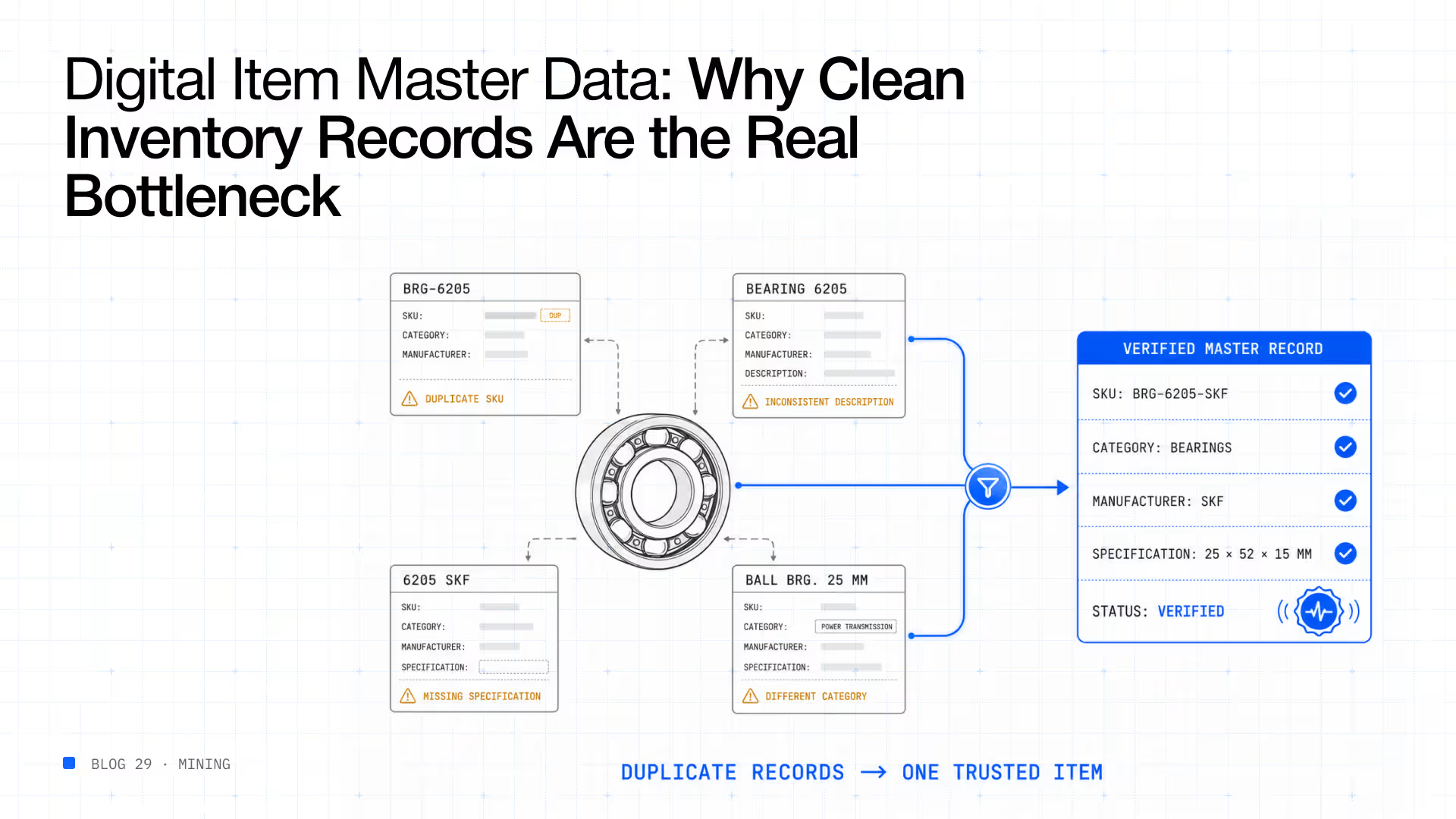
In many organizations, inventory items are created by multiple departments without standardized naming conventions. Procurement teams may describe a bearing differently from maintenance teams. Warehouse personnel may abbreviate product descriptions, while suppliers use manufacturer-specific terminology. Although these records refer to the same physical item, the ERP treats them as separate inventory records.
The problem becomes even more significant over several years. Employees leave the organization, supplier catalogs change, inventory systems are upgraded, and thousands of new items are introduced without consistent governance. Eventually, organizations lose confidence in their inventory database because identical inventory exists under multiple names and similar products cannot be easily identified.
For mining, manufacturing, oil and gas, construction, and other asset-intensive industries managing hundreds of thousands of inventory records, poor item master data becomes a major operational challenge rather than simply an administrative issue.
A clean item master serves as the foundation for every inventory process across the organization.
When inventory records are standardized, warehouse teams can locate materials faster, procurement professionals can verify existing inventory before purchasing new stock, maintenance planners can identify compatible spare parts more easily, and finance teams can generate more reliable inventory reports.
Conversely, poor inventory data affects every department. Duplicate inventory records increase procurement costs, inconsistent descriptions reduce inventory visibility, and incomplete specifications make supplier comparisons more difficult. Even advanced inventory technologies such as RFID, barcode scanning, and Inventory Intelligence Platforms depend on accurate master data to function effectively.
This is why item master data cleansing should be viewed as an operational improvement initiative rather than simply a data management exercise. High-quality inventory data enables better inventory decisions throughout the business.
One of the most common reasons organizations invest in item master data cleansing is the growing number of duplicate and inconsistent Stock Keeping Units (SKUs).
Duplicate SKUs often occur when identical inventory items are entered into the ERP multiple times using different descriptions, manufacturer names, abbreviations, or supplier references. For example, the same industrial bearing could appear under several different inventory records depending on who created the item.
These duplicate records create several operational problems.
Procurement teams may unknowingly purchase inventory that already exists elsewhere in the business. Warehouse personnel spend additional time searching multiple inventory records to locate the correct item. Inventory planners overestimate demand because consumption is divided across duplicate SKUs. Finance teams struggle to calculate accurate inventory valuation because identical inventory is recorded separately.
Duplicate records also reduce inventory visibility. Instead of presenting one accurate inventory position, the system displays multiple incomplete records, making it difficult to understand actual stock availability across the organization.
As duplicate SKUs increase, inventory carrying costs rise while inventory accuracy continues to decline. Organizations often respond by purchasing additional safety stock, creating further excess inventory and increasing working capital requirements.
Inventory accuracy depends on more than counting inventory correctly. It also depends on whether the inventory records themselves accurately represent what exists physically across the operation.
Item master data cleansing improves inventory accuracy by standardizing descriptions, eliminating duplicate records, correcting specifications, validating supplier information, and ensuring every inventory item follows consistent classification rules.
A structured data cleansing initiative typically includes:
These improvements create a cleaner inventory database that supports better reporting, more accurate inventory planning, and improved inventory visibility across warehouses, stockyards, maintenance facilities, and remote operational sites.
Inventory visibility begins with inventory quality. Discover how Scatterlink helps industrial organizations improve inventory accuracy through intelligent item master data management and real-time inventory visibility.
While item master data cleansing removes duplicate and inconsistent inventory records, auto-classification ensures that every inventory item is organized using standardized rules that remain consistent as the inventory database grows.
In many industrial organizations, inventory categories develop organically over several years. Similar items are grouped differently depending on who created the record, which supplier provided the material, or which business unit purchased it. As a result, inventory searches become inconsistent, reporting loses accuracy, and procurement teams struggle to identify interchangeable parts.
Auto-classification solves this challenge by applying standardized classification rules across the entire inventory database. Instead of relying on manual categorization, inventory items are automatically grouped based on predefined attributes such as equipment type, commodity, manufacturer, application, material class, or industry classification standards like UNSPSC.
When combined with item master data cleansing, auto-classification creates a structured inventory database that improves inventory search, simplifies procurement, strengthens reporting, and provides greater visibility into inventory utilization across multiple operational sites.
For organizations managing hundreds of thousands of inventory records, automated classification also reduces the ongoing effort required to maintain data quality while ensuring that new inventory items follow consistent standards from the moment they are created.
An audit-ready inventory catalog is more than a list of part numbers. It is a complete digital record that enables anyone in the organization to identify, verify, locate, and understand an inventory item without relying on institutional knowledge.
A well-structured item catalog should include standardized item descriptions, manufacturer information, supplier references, technical specifications, units of measure, storage locations, inventory status, associated documentation, and high-quality images where applicable. These attributes reduce ambiguity while improving inventory identification across warehouses, maintenance facilities, procurement departments, and operational sites.
Adding images to inventory records is particularly valuable for industrial organizations managing visually similar spare parts. Maintenance technicians and warehouse personnel can verify inventory quickly without relying solely on lengthy product descriptions or manufacturer codes. This reduces issuing errors while improving inventory search efficiency.
Organizations should also establish governance processes for creating new inventory records. Standard approval workflows, mandatory data fields, and validation rules help prevent duplicate records from reappearing after the initial item master data cleansing project has been completed.
An audit-ready item catalog not only improves operational efficiency but also supports regulatory compliance, internal audits, inventory valuation, procurement standardization, and long-term inventory accuracy.
Scatterlink's Inventory Intelligence Platform extends beyond inventory visibility by helping organizations improve the quality and usability of their inventory data.
Through intelligent inventory management, organizations can identify duplicate inventory records, standardize inventory descriptions, improve inventory classification, and maintain consistent inventory information across warehouses, stockyards, maintenance facilities, and remote operational sites. Instead of allowing poor-quality data to accumulate over time, Scatterlink helps create a reliable inventory foundation that supports every operational process.
The platform integrates seamlessly with existing ERP systems, ensuring improvements made during item master data cleansing are reflected across the broader enterprise environment. Combined with RFID technology, barcode scanning, mobile inventory applications, GPS-enabled location tracking, and real-time inventory intelligence, organizations gain both accurate inventory data and complete visibility into how inventory moves throughout the business.
Scatterlink also supports image-based inventory records, standardized item information, and intelligent inventory search capabilities, allowing warehouse personnel, procurement professionals, and maintenance teams to locate the correct inventory quickly without relying on local knowledge or inconsistent naming conventions.
By combining clean master data with real-time inventory visibility, organizations can significantly improve inventory accuracy, reduce duplicate purchases, streamline procurement, and support faster operational decision-making.
Clean inventory data is the foundation of inventory intelligence. Discover how Scatterlink helps industrial organizations standardize inventory records while delivering complete visibility across every inventory location.
Item master data cleansing is one of the highest-impact initiatives industrial organizations can undertake to improve inventory management. While technologies such as RFID, mobile inventory applications, and Inventory Intelligence Platforms provide real-time visibility, their effectiveness depends on the quality of the underlying inventory data.
Duplicate records, inconsistent descriptions, incomplete specifications, and poor classification reduce inventory accuracy, increase procurement costs, and make inventory unnecessarily difficult to manage. These issues affect every department, from warehouse operations and maintenance to procurement and finance.
By investing in structured item master data cleansing, standardized classification, and ongoing data governance, organizations create a reliable inventory foundation that supports better operational decisions, improves inventory visibility, and reduces unnecessary inventory investment.
For mining, manufacturing, construction, oil and gas, and other asset-intensive industries, clean inventory data is no longer just an administrative objective. It is a critical requirement for achieving operational excellence and maximizing the value of modern inventory technologies.
Ready to improve inventory accuracy from the ground up? Learn how Scatterlink combines clean item master data with real-time inventory intelligence to help industrial organizations make faster, smarter inventory decisions.
Item master data cleansing is the process of improving inventory data quality by removing duplicate records, standardizing item descriptions, correcting inaccurate information, validating inventory attributes, and organizing inventory into consistent classifications.
Item master data supports every inventory process within an organization. Accurate inventory records improve procurement, inventory visibility, maintenance planning, reporting, inventory accuracy, and operational decision-making.
Duplicate SKUs increase inventory carrying costs, lead to duplicate purchases, reduce inventory visibility, complicate reporting, divide inventory history across multiple records, and decrease confidence in inventory data.
Auto-classification automatically organizes inventory items into standardized categories using predefined business rules or industry standards. It improves inventory search, reporting, procurement efficiency, and long-term data consistency.
Item master data cleansing should be treated as an ongoing process rather than a one-time project. Regular data governance, standardized approval workflows, and automated validation help maintain inventory data quality as new inventory records are created.
%20(1).avif)
.avif)
%20(1).avif)