
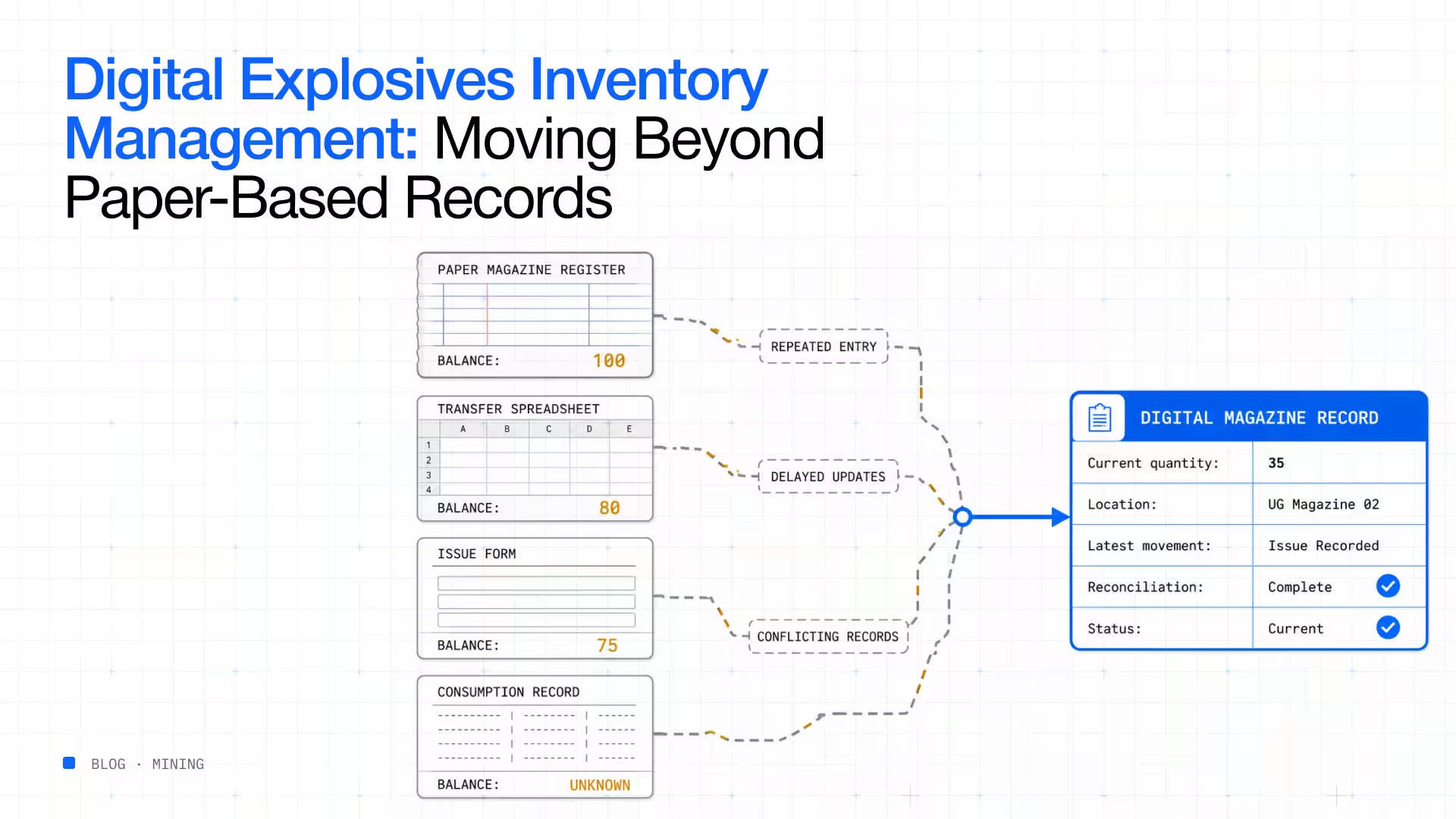
Paper-based explosives inventory records can become difficult to manage as mining operations grow, inventory moves between locations and multiple teams become involved in the process. A magazine register may record what was received or issued, while another spreadsheet tracks stock balances and a separate system contains operational information. The result is often fragmented inventory data that takes time to reconcile.
Digital explosives inventory management brings these records and transactions into a more connected workflow. Instead of relying on manual updates and repeated data entry, mining teams can capture inventory activity digitally and maintain a more consistent record of what was received, stored, transferred, issued and consumed.
For operations managing explosives across multiple magazines, sites, surface areas and underground environments, this shift can provide more than convenience. It can improve inventory visibility, strengthen transaction control and make it easier to understand the history of explosive materials throughout their operational lifecycle.
Digital explosives inventory management is the use of software and connected technologies to record, track and manage explosives throughout their inventory lifecycle. It can cover receiving, magazine storage, transfers, issuing, returns, stock verification, reconciliation and consumption.
The purpose is to create a digital record that reflects the physical movement of inventory. Instead of depending on separate paper documents or spreadsheets, transactions can be captured through a structured inventory workflow.
A digital approach also makes inventory information easier to access and analyse. Authorised users can view relevant stock information, review transaction history and identify discrepancies without having to manually consolidate information from multiple records.
Paper records can be useful for documenting individual activities, but they become harder to manage when inventory transactions increase across multiple locations. Each manual entry introduces the possibility of incorrect quantities, missing information, illegible records or delayed updates.
The problem becomes more significant when information needs to be transferred from paper into another system. Re-entering the same inventory information creates additional work and can introduce discrepancies between the original record and the digital record.
Digital inventory management reduces the need to duplicate information across different formats. Instead, the transaction can be captured once within the inventory workflow and become part of the broader inventory history.
Manual processes often mean that inventory activity is recorded after the physical movement has already taken place. During this gap, the recorded inventory may not represent the actual stock position.
This can make it difficult for teams to determine what is currently available. It can also create problems when multiple transactions occur before the records are updated.
Information may need to be entered into a magazine register, spreadsheet, ERP system or another operational record. Repeating the same information across several systems increases the possibility of inconsistent data.
Digital workflows can reduce this duplication by allowing information to be captured once and connected to the relevant inventory record.
Finding a historical transaction in paper records can take considerable time, especially when teams need information from multiple magazines or dates. Searching through spreadsheets can also become difficult when records contain large volumes of transactions.
A digital transaction history makes relevant inventory information easier to retrieve. Authorised users can search and review records without manually going through individual documents.
Separate records for different magazines can create fragmented inventory visibility. Teams may know the stock position at one location but have limited visibility into inventory held elsewhere.
A connected inventory platform can provide a broader view of inventory across locations, helping teams understand where stock is held and how it has moved.
Digital magazine management creates a structured record of inventory activity at each controlled location. Receiving, transfers, issues, returns and stock verification can be captured as transactions associated with the relevant magazine.
This makes it easier to understand how the current inventory balance was created. Instead of seeing only a quantity, users can review the transactions that changed the balance over time.
The result is a more transparent inventory process. Teams can identify stock movements, investigate discrepancies and access information without relying entirely on individual knowledge.
A digital explosives inventory system should support the major transactions that affect inventory throughout its lifecycle. The exact requirements will vary between operations, but a comprehensive workflow can include:
The important factor is how these activities connect. A digital system becomes significantly more valuable when transactions contribute to one continuous inventory record rather than creating another collection of disconnected digital documents.
The explosives inventory lifecycle begins when material is received into the operation. The receiving transaction establishes the initial record of the inventory and provides information about where the stock is being held.
From there, inventory can move between magazines or other controlled locations before being issued for operational use. Each movement changes the inventory position and should therefore be reflected in the digital record.
Consumption represents another important stage in the lifecycle. When consumption information is connected to receiving, transfers and issues, organisations can develop a clearer picture of how inventory moved from receipt through to its final use.
Traceability depends on maintaining a reliable history of inventory movements. Digital records can connect individual transactions so that authorised users can understand where inventory came from, where it moved and what happened to it.
This is particularly useful when investigating discrepancies. Instead of reviewing isolated records, teams can examine the sequence of transactions associated with a particular inventory item or location.
Digital traceability can also improve information retrieval. When historical records are structured and searchable, teams can access relevant information more efficiently than they could through manual document searches.
Digitising records does not necessarily mean an organisation has implemented digital inventory management. Scanning paper documents or transferring spreadsheet information into a database can create digital records without changing the underlying process.
Digital inventory management connects the records to actual inventory workflows. Receiving, transfers, issues, returns, stocktakes and consumption become part of a controlled process that updates the inventory position and maintains transaction history.
This distinction is important because the objective should be operational visibility, not simply storing existing paperwork in electronic form.
Inventory accuracy depends on keeping recorded stock aligned with physical stock. Digital workflows can support this by making inventory transactions more structured and easier to capture consistently.
When an authorised user records a transfer or issue through a defined workflow, the relevant inventory record can be updated without requiring the same information to be manually entered in several places. This can reduce opportunities for data duplication and delayed updates.
Digital records also make discrepancies easier to investigate. When a physical count does not match the system balance, teams can review the transaction history to identify possible causes.
Mining operations may manage explosives across both surface and underground environments, creating additional challenges for inventory visibility. Users may operate in locations where connectivity is inconsistent or where returning to a fixed workstation simply to update an inventory record is impractical.
Digital inventory management should therefore support mobile workflows that fit the operating environment. Where required, offline capabilities can allow authorised users to capture relevant information without depending on continuous connectivity.
This helps create a more consistent inventory process across surface and underground locations. Instead of maintaining separate manual systems for different environments, organisations can work towards a connected inventory view.
Offline inventory management allows authorised users to capture inventory activity when a continuous network connection is unavailable. This can be particularly valuable in underground mining and remote operational areas.
Without offline functionality, users may have to write transactions down and enter them later. That creates a delay between the physical movement and the digital record and increases the possibility of forgotten or incorrectly reconstructed transactions.
An offline-capable mobile workflow can help maintain continuity. Transactions can be captured at the point of activity and synchronised when connectivity becomes available, depending on the platform’s architecture and configuration.
RFID can provide automated identification of tagged inventory and help connect physical inventory with digital records. Instead of relying entirely on manual item identification, RFID-enabled workflows can support faster identification and inventory capture.
The value of RFID comes from its connection to the broader inventory process. Identification data needs to be associated with the correct inventory record and transaction so that the system reflects what actually happened in the physical environment.
For mining operations exploring digital inventory management, MagControl can provide a more connected approach to explosives inventory visibility and control, helping bring the explosives management process closer to a single digital workflow.
Accurate records are an important part of maintaining controlled explosives inventory processes. Digital systems can help organisations maintain structured records of inventory movements, locations and transactions rather than relying on scattered documentation.
A consistent transaction history can also make information easier to retrieve when records need to be reviewed. Instead of searching through multiple documents, authorised users can access the relevant digital history through the inventory system.
Compliance requirements differ by jurisdiction and operation, so digital inventory management should support the organisation’s established procedures rather than being treated as a substitute for regulatory controls.
Digital explosives inventory management can provide several operational benefits when implemented as part of a well-designed inventory process.
Teams can access a more current view of inventory quantities and locations instead of relying on periodic manual reports.
Standardised digital workflows can help ensure that receiving, transfers, issues, returns and adjustments are captured consistently.
Searchable digital records make it easier to find historical transactions and inventory information.
Connected transaction histories can provide a clearer record of inventory movements throughout the lifecycle.
When physical inventory differs from recorded stock, transaction history can help teams investigate where the discrepancy originated.
A connected system can provide visibility across multiple magazines and operational locations instead of maintaining isolated inventory records.
Moving from paper-based explosives inventory management to a digital process requires more than selecting software. Organisations should first understand how inventory currently moves through the operation and where information is created, transferred or lost.
The system should also fit the operational environment. If users work underground, remotely or in areas with limited connectivity, mobile and offline functionality may be important requirements.
Finally, the digital system should support the organisation’s existing controls and processes. The objective is to create a practical workflow that users can follow consistently, while giving management greater visibility into inventory activity.
See how Scatterlink approaches inventory intelligence for industrial operations and how connected inventory data can support more informed operational decisions.
Moving from paper-based explosives records to digital inventory management should begin with the inventory processes that create the greatest operational risk. Receiving, magazine transfers, issuing, returns, stock verification and consumption should be mapped to understand where information is currently captured and where delays or duplication occur. This gives the operation a clear picture of which manual processes need to be improved first.
The transition should not be treated as simply replacing a paper register with a digital screen. The objective is to create a connected workflow where each inventory transaction contributes to an accurate and traceable stock position. When the digital process reflects the way inventory physically moves through the operation, adoption becomes easier and the resulting data becomes more useful.
A digital explosives inventory workflow should connect the major stages of the inventory lifecycle. This can begin with receiving and continue through magazine storage, transfers, issues, returns, stock verification and consumption. Each transaction should update the relevant inventory information and contribute to the overall history.
The workflow should also establish appropriate controls around inventory transactions. Users should be able to record the activities relevant to their role, while the organisation maintains visibility into when and where transactions occurred.
For mining operations, the workflow should work across the environments where inventory is actually managed. This includes surface and underground locations, multiple magazines and areas where connectivity may not always be reliable.
A digital magazine register can provide a structured record of the inventory associated with a particular magazine. Instead of maintaining a physical register that needs to be manually updated and reconciled, inventory activity can be captured as digital transactions.
This allows teams to see how the magazine’s inventory position has changed over time. Receiving, transfers, issues and returns can be connected to the relevant stock record, creating greater visibility into the current balance.
The real benefit comes when magazine records are connected across the operation. Rather than having individual digital registers that remain isolated, mining teams can work towards a consolidated view of inventory across multiple locations.
Reconciliation becomes more efficient when inventory records contain the transactions that created the current balance. If the physical stock does not match the recorded quantity, teams can review the relevant transaction history rather than starting the investigation from scratch.
For example, a discrepancy may relate to a transfer that was not captured, an issue recorded against the wrong location or a return that was not entered correctly. A connected transaction history provides the context needed to investigate these possibilities.
Digital reconciliation therefore helps move the process beyond simply correcting a number. The focus becomes identifying the source of the discrepancy and improving the process that caused it.
Digital inventory management does not automatically create accurate inventory data. The information entering the system still needs to be complete, consistent and correctly associated with the relevant inventory item and location.
This makes data quality an important part of digital explosives management. Item identification, location information, quantities and transaction types should follow consistent definitions across the operation.
When inventory data is structured properly, it becomes easier to search, reconcile and analyse. Poor data quality, on the other hand, can simply turn a paper-based problem into a digital one.
Duplicate records can occur when the same inventory information is maintained across multiple spreadsheets, registers or systems. This creates uncertainty about which record represents the current inventory position.
A connected digital workflow can reduce this duplication by establishing a consistent inventory record and allowing transactions to update the relevant information through defined processes.
This becomes particularly valuable when several magazines or operational locations are involved. Instead of maintaining separate records and manually consolidating them, authorised users can work from a more connected inventory structure.
Mobile inventory management allows users to capture inventory transactions closer to where physical activity occurs. This reduces the need to write information down and enter it later from a fixed workstation.
For explosives inventory, this can be particularly useful when teams are moving between magazines, operational areas and other controlled locations. The closer the digital record is created to the physical transaction, the less reliance there is on memory or delayed data entry.
A mobile workflow can also help standardise transaction capture across different locations. Users can follow the same basic process regardless of whether they are working in a surface or underground environment.
Underground mining environments can present connectivity challenges that make continuous online access difficult. A digital inventory process that depends entirely on a live connection may therefore be impractical in some operating areas.
Offline functionality allows users to capture relevant inventory activity even when connectivity is temporarily unavailable. The transaction can then be synchronised when the connection is restored, depending on the system’s configuration.
This helps maintain continuity between physical inventory activity and the digital record. It can also reduce the need for temporary paper notes that have to be entered manually at a later stage.
RFID can support digital inventory management by providing automated identification of tagged inventory. This can reduce some of the manual effort involved in identifying items and capturing inventory information.
When RFID is connected to an inventory management platform, the identification data can become part of the wider inventory workflow. This creates an opportunity to connect physical inventory with digital records more efficiently.
However, RFID should be viewed as one component of a broader inventory strategy. Accurate item data, controlled transactions, location information and appropriate workflows are still essential for creating reliable inventory visibility.
Looking to connect explosives identification with a more structured digital inventory process? Explore MagControl to see how Scatterlink approaches digital explosives inventory management.
Multi-site operations face a particular challenge because inventory can be distributed across geographically separated locations. Each location may maintain its own stock records, while management still needs to understand the overall inventory position.
A connected digital system can provide visibility across these locations while retaining the detail associated with individual magazines and transactions. This allows teams to move between the local and operational view of inventory without manually consolidating separate records.
Multi-site visibility can also support better inventory utilisation. Before requesting or purchasing additional inventory, teams can have greater visibility into stock that may already be available elsewhere within the organisation.
Traceability requires more than knowing the current inventory balance. It requires a record of the relevant movements that occurred throughout the inventory lifecycle.
Digital inventory management can connect receiving, storage, transfers, issuing, returns and consumption into a continuous history. This allows authorised users to follow inventory activity and investigate specific transactions when required.
The result is a more complete record of inventory movement. Instead of relying on separate documents to establish what happened, teams can use connected transaction data to reconstruct the relevant history.
Digital records can help organisations maintain structured information about inventory transactions and movements. When records are captured consistently, it becomes easier to retrieve information and review historical activity.
A digital system can also reduce reliance on individual spreadsheets or paper documents that may be stored in different locations. Centralised access to authorised inventory information can make routine reviews more efficient.
Compliance requirements vary by jurisdiction, operation and material type, so digital inventory management should support established regulatory and internal processes rather than replace them. The value lies in providing a more consistent and accessible record of the inventory activity those processes require.
Want to see how a connected inventory platform can support greater visibility across industrial operations? Visit the Scatterlink home page to explore the platform.
The benefits of digital explosives inventory management extend beyond reducing paperwork. When the system is designed around the actual inventory lifecycle, it can improve how teams access, control and use inventory information.
Teams can access a more current view of inventory quantities and locations rather than relying on periodic manual reports.
Defined digital workflows can create greater consistency around receiving, transfers, issues, returns and adjustments.
Connected transaction histories can make it easier to investigate differences between physical and recorded inventory.
Digital records can provide a more complete history of inventory movements from receipt through consumption.
A connected inventory view can help teams understand inventory distributed across magazines, sites, surface operations and underground environments.
Digital workflows can reduce repeated data entry and the manual consolidation of information from different records.
Once an operation moves towards digital explosives inventory management, performance should be measured rather than assumed. KPIs can help determine whether the new process is actually improving inventory control.
Measures how closely system records match verified physical stock.
Tracks the quantity or frequency of differences between recorded and physical inventory.
Measures how quickly receiving, transfer, issue, return and consumption transactions are captured.
Tracks whether required stock verification and reconciliation activities are being completed according to defined procedures.
Measures how quickly users can locate required inventory information. A reduction in search time can indicate improved inventory visibility.
Compares recorded consumption with relevant issued or operational quantities to identify unusual differences that may require investigation.
Technology cannot fix an inventory process that has not been clearly defined. Organisations should understand the existing workflow before attempting to digitise it.
If teams continue updating spreadsheets and paper records alongside the new platform, the organisation may still experience conflicting inventory information.
A system that is difficult to use in the field may encourage users to delay transactions or create workarounds. Digital processes should reflect how inventory is actually handled.
A system designed only for permanently connected environments may not work effectively across underground operations. Offline and mobile capabilities should be considered where the operating environment requires them.
Digital inventory management should track movements as well as balances. Without transaction history, teams may still struggle to understand why inventory changed.
Start by mapping the complete inventory lifecycle across the operation. Identify every point where explosives are received, stored, transferred, issued, returned, verified and consumed, including surface and underground locations.
Next, standardise the core inventory transactions. Define how each movement should be recorded and establish clear ownership for the relevant activities. This creates a consistent foundation before technology is introduced.
Finally, choose technology that fits the operational environment. Mobile functionality, offline capability, RFID identification, multi-location visibility and transaction-level history can all be important depending on the organisation’s requirements.
Ready to move from fragmented explosives records to connected inventory management? Explore MagControl and see how it can support greater control and visibility across the explosives inventory lifecycle.
The future of explosives inventory management is moving towards more connected, data-driven processes. Instead of treating magazine records, inventory transactions, stock verification and consumption as separate activities, organisations can connect these processes into one operational inventory lifecycle.
Technologies such as RFID, mobile applications, offline workflows and inventory intelligence platforms can contribute to this shift. The objective is to make inventory information more accurate, accessible and actionable without adding unnecessary administrative work for field teams.
For mining operations, this means moving towards a model where teams can understand inventory not only by quantity, but also by location, movement, transaction history and consumption. That broader visibility can provide a stronger foundation for operational decision-making.
Digital explosives inventory management is about more than replacing paper records with software. It is about creating a connected process that follows explosives from receipt and magazine storage through transfers, issuing, returns, verification and consumption.
When inventory transactions are captured consistently, mining teams can improve visibility, strengthen traceability and investigate discrepancies more efficiently. Mobile and offline capabilities can further extend that visibility into the environments where traditional systems are difficult to use.
The most effective digital approach is one that fits the operational reality of the mine. By connecting inventory data, magazine activity and transaction history across surface and underground operations, organisations can build a more reliable foundation for explosives inventory control.
Digital explosives inventory management uses software and connected technologies to record, track and manage explosive materials throughout their inventory lifecycle. It can include receiving, storage, transfers, issuing, returns, reconciliation and consumption.
Digital inventory management can reduce duplicate data entry, improve transaction visibility and make historical records easier to retrieve. It can also provide a more consistent view of inventory across multiple magazines and locations.
A digital magazine register is an electronic record of inventory associated with a particular explosive magazine. It can record stock movements and transactions while maintaining a history of changes to the magazine’s inventory balance.
Yes. Digital inventory systems designed for mining can support underground operations through mobile workflows and, where required, offline functionality that allows users to capture transactions without continuous connectivity.
RFID can help identify tagged inventory and connect physical inventory with digital records. When integrated into an inventory workflow, it can support faster identification and more efficient inventory tracking.
It can connect receiving, storage, transfers, issues, returns and consumption into a transaction history. This makes it easier for authorised users to understand how inventory moved throughout its lifecycle.
Key benefits can include improved inventory visibility, stronger transaction control, faster reconciliation, better traceability, multi-location visibility and reduced reliance on manual records.
They should consider inventory lifecycle coverage, magazine-level visibility, mobile functionality, offline capability, transaction history, reconciliation, consumption tracking, RFID support, reporting and integration requirements.
No. Digital inventory management supports the record keeping and operational processes required by an organisation, but it does not replace applicable regulations, compliance requirements or established safety procedures.
%20(1).avif)
.avif)
%20(1).avif)