
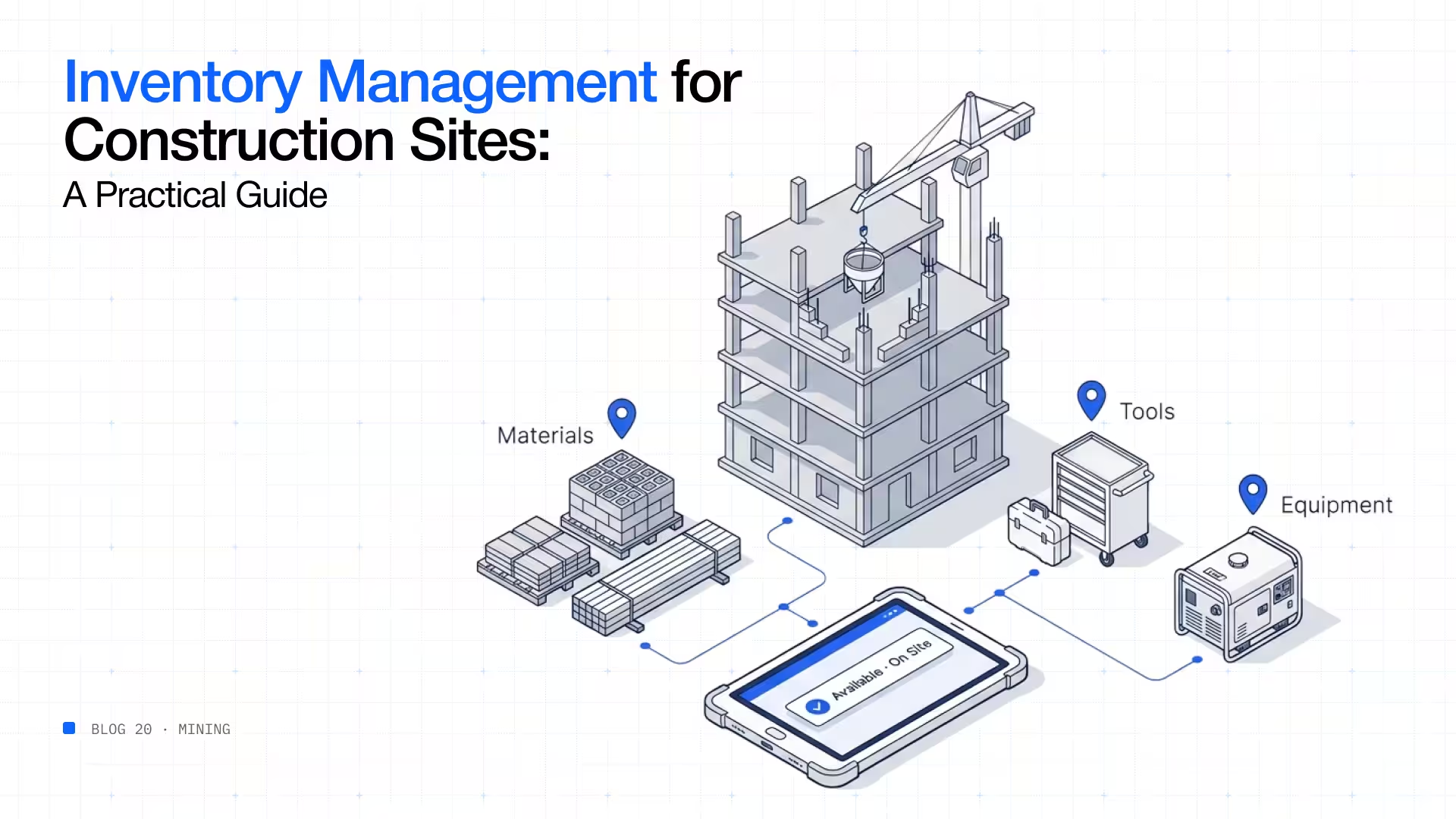
Construction projects operate in fast-moving and constantly changing environments. Materials arrive daily, equipment moves between job sites, subcontractors require tools at different stages of the project, and project timelines depend on having the right resources available at the right time. Managing this complexity without accurate inventory information often leads to material shortages, duplicate purchases, project delays, and unnecessary costs.
This is why construction inventory management has become a critical function for modern construction companies. Effective construction inventory management provides complete visibility into materials, equipment, tools, and consumables across every project location. Instead of relying on manual tracking, spreadsheets, or verbal updates, organizations can make informed decisions using accurate and up-to-date inventory information.
As construction projects become larger and more geographically distributed, maintaining inventory visibility becomes increasingly challenging. Materials may be stored in central warehouses, temporary laydown yards, multiple job sites, or mobile storage units. Without a structured inventory management process, locating critical inventory quickly becomes difficult, slowing down work and affecting project schedules.
This guide explains the challenges of construction inventory management, the operational risks associated with poor inventory visibility, and the best practices that help construction companies improve inventory control while reducing project delays.
Unlike traditional warehouse operations, construction inventory is constantly moving. Materials are delivered directly to project sites, equipment is transferred between locations, and inventory consumption changes as different phases of construction progress.
A single project may involve structural steel, concrete materials, electrical components, plumbing supplies, mechanical equipment, safety gear, hand tools, heavy machinery, and thousands of fasteners and consumables. Each category follows a different procurement cycle, storage requirement, and usage pattern.
Managing this inventory becomes even more complex when organizations are running multiple projects simultaneously. Materials purchased for one project may need to be transferred to another, while specialized equipment moves continuously between sites based on changing project priorities.
Because of this dynamic environment, construction inventory management requires far greater visibility and coordination than traditional warehouse inventory management.
Although every construction company operates differently, most face similar inventory-related challenges.
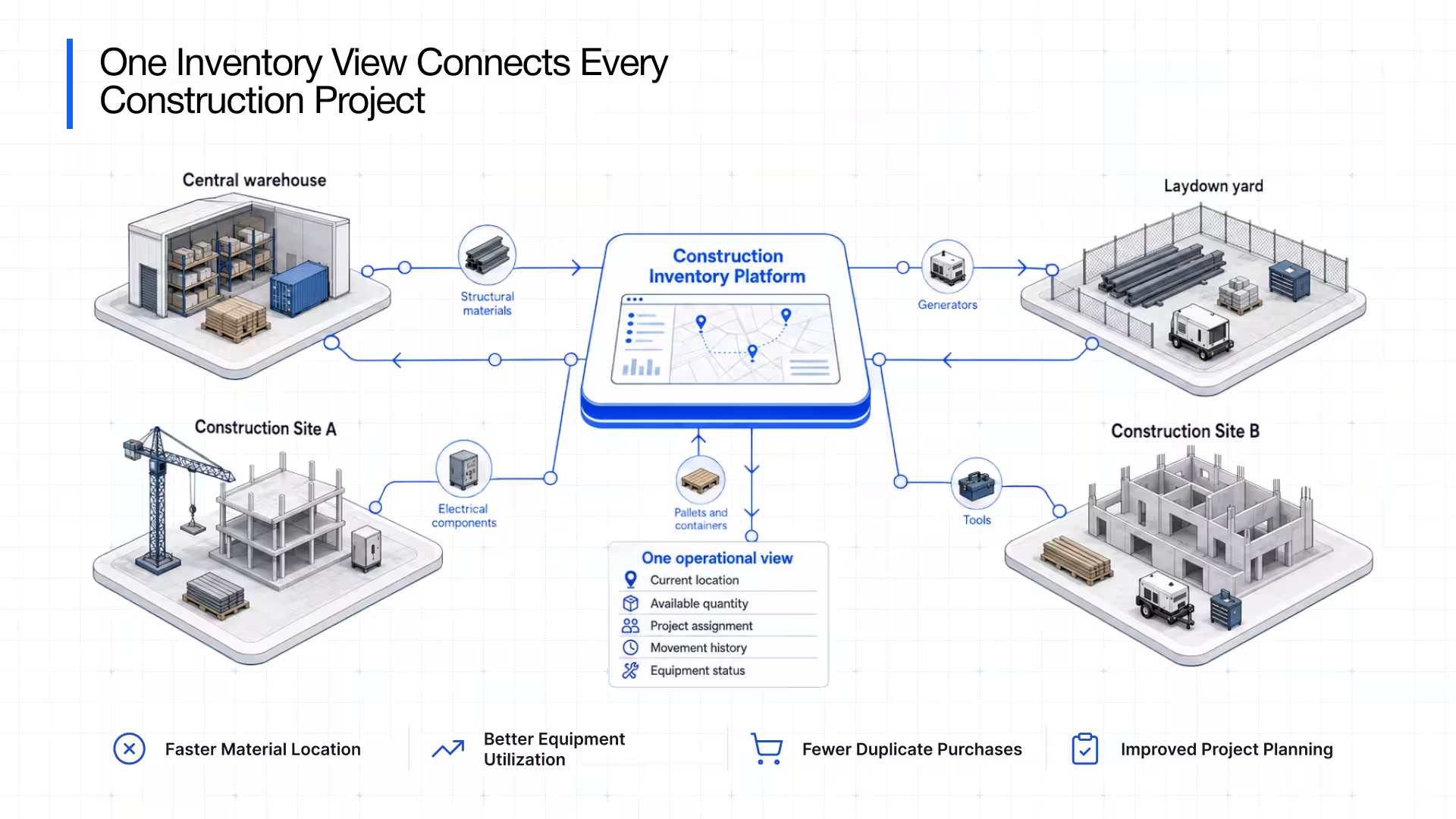
Construction companies rarely operate from a single location. Materials are distributed across warehouses, temporary storage areas, active job sites, fabrication facilities, and supplier locations. Without centralized inventory visibility, employees often struggle to determine where materials are currently located.
As projects grow, this lack of visibility increases the likelihood of duplicate purchases and unnecessary material transfers.
Construction equipment frequently moves between projects throughout its lifecycle. Generators, welding equipment, compressors, surveying instruments, power tools, and lifting equipment are regularly relocated based on operational requirements.
Without effective construction inventory management, equipment may remain idle at completed projects while other sites unnecessarily rent or purchase replacement equipment.
This increases project costs while reducing equipment utilization across the organization.
Many construction companies still rely on spreadsheets, handwritten logs, or verbal communication to track inventory movement.
Although these methods may work for smaller projects, they become increasingly unreliable as operations expand. Inventory updates are often delayed, transactions are missed, and project managers lose confidence in inventory information.
As a result, employees spend valuable time searching for materials rather than progressing with construction activities.
Because project delays are costly, many organizations intentionally purchase additional materials to reduce the risk of shortages.
While this approach may prevent immediate disruptions, it often creates new challenges. Excess inventory occupies valuable storage space, increases carrying costs, and frequently becomes obsolete or damaged before it is used.
Effective construction inventory management helps organizations balance inventory availability with inventory optimization, reducing both shortages and excess stock.
Construction projects move quickly. Your inventory information should too. Learn how Scatterlink helps construction companies gain complete visibility into materials, tools, and equipment across every project location.
Construction schedules depend on coordination. Materials, equipment, subcontractors, and labor must all be available at the right time for work to continue efficiently.
When inventory visibility is limited, project managers spend valuable time confirming material availability, maintenance teams search for equipment, and procurement departments place orders based on incomplete information.
Real-time inventory visibility changes this process entirely.
Instead of relying on manual verification, project teams can immediately determine where inventory is located, whether it is available, and when it can be delivered to the required job site. This improves planning, reduces project delays, and helps organizations utilize existing inventory before purchasing additional materials.
For companies managing multiple active projects, improved inventory visibility quickly becomes one of the most valuable outcomes of effective construction inventory management.
Materials are not the only inventory that requires visibility.
Construction companies also manage significant investments in heavy equipment, mobile machinery, specialized tools, and temporary assets that frequently move between locations. Knowing where this equipment is located directly affects project scheduling, equipment utilization, and operational efficiency.
Without structured construction inventory management, equipment movement often depends on manual communication between project teams. This creates delays whenever equipment cannot be located or is assumed to be available when it is actually assigned elsewhere.
Modern inventory technologies help eliminate these uncertainties by providing continuous visibility into equipment location and movement across every project.
Successful construction inventory management is built on consistency, visibility, and accountability. While every construction project is unique, the organizations that maintain high inventory accuracy typically follow a common set of practices that reduce delays and improve operational efficiency.
Rather than managing inventory only when problems arise, leading construction companies establish standardized inventory processes that support every stage of the project lifecycle. From procurement and receiving to material consumption and project completion, inventory should be tracked continuously so every team works with the same accurate information.
The following best practices help improve construction inventory management while reducing unnecessary project costs.
One of the biggest obstacles to effective construction inventory management is fragmented inventory information.
Materials, equipment, and tools are often distributed across warehouses, temporary laydown yards, fabrication facilities, and multiple active construction sites. If each location maintains separate inventory records, project managers cannot easily determine where inventory is available or whether it can be reallocated before placing new purchase orders.
A centralized inventory platform gives every stakeholder access to the same inventory information. Procurement teams can identify available materials before ordering replacements, project managers gain confidence in project planning, and warehouse personnel can coordinate inventory transfers more efficiently.
Improving inventory visibility across every location helps construction companies maximize existing inventory while reducing unnecessary procurement.
Inventory visibility should begin the moment materials arrive on site.
Construction materials frequently move through several stages before they are installed. Deliveries are unloaded, inspected, stored in temporary staging areas, transferred closer to the work zone, and finally consumed during construction activities. If these movements are not recorded, inventory records quickly become inaccurate.
Effective construction inventory management tracks every material movement throughout its lifecycle. This allows project teams to know exactly where materials are located, how much inventory remains available, and whether additional procurement will be required later in the project.
Continuous tracking also reduces material loss, improves accountability, and supports more accurate project reporting.
Equipment theft and misplaced tools remain major challenges across the construction industry. High-value assets frequently move between job sites, subcontractors, storage containers, and maintenance facilities. Without reliable tracking, organizations may spend considerable time locating equipment that they already own.
Modern construction inventory management solutions improve equipment visibility by recording asset movements automatically and maintaining a complete history of location changes. Project managers can quickly determine where equipment is assigned, when it was last used, and whether it is available for another project.
Improved visibility not only reduces equipment loss but also increases equipment utilization, allowing organizations to maximize the return on existing investments before purchasing or renting additional equipment.
Every misplaced tool, delayed delivery, and duplicate purchase affects project profitability. Discover how Scatterlink helps construction companies improve inventory visibility across every job site.
Construction work rarely happens inside an office. Inventory transactions occur on active job sites where supervisors, warehouse personnel, and subcontractors need immediate access to inventory information.
Mobile inventory applications allow employees to receive deliveries, issue materials, transfer equipment, perform inventory counts, and search inventory directly from the field. This eliminates delays caused by manual paperwork while ensuring inventory records remain accurate throughout the project.
For remote construction sites with unreliable connectivity, offline-first mobile capability becomes particularly valuable. Employees can continue recording inventory transactions without an internet connection, and data synchronizes automatically once connectivity returns.
This enables construction inventory management to continue uninterrupted regardless of project location.
Manual inventory tracking becomes increasingly difficult as project size grows. Thousands of materials, tools, and equipment items moving across multiple locations create opportunities for inventory discrepancies and missing transactions.
Barcode and RFID technologies simplify inventory capture while reducing manual effort.
Barcode scanning provides an efficient method for recording inventory transactions during receiving, issuing, and material transfers. RFID extends these capabilities further by allowing multiple tagged items to be identified simultaneously, improving inventory counts and increasing visibility across large construction sites.
By integrating these technologies into construction inventory management, organizations improve inventory accuracy while reducing administrative workload for field teams.
Construction companies require inventory management that supports dynamic project environments rather than traditional warehouse operations.
Scatterlink's Inventory Intelligence Platform helps organizations modernize construction inventory management by providing real-time visibility into materials, equipment, tools, and consumables across warehouses, laydown yards, fabrication facilities, and active construction sites.
Using RFID, barcode scanning, mobile inventory applications, GPS-enabled location tracking, IoT devices, and seamless ERP integration, Scatterlink enables project teams to locate inventory quickly, record inventory movements in real time, and maintain accurate inventory records throughout every stage of construction.
The platform's offline-first mobile capability allows inventory transactions to continue even when projects operate in locations with limited network connectivity. Employees can receive deliveries, issue materials, transfer equipment, and complete inventory counts without interrupting work, while data synchronizes automatically once connectivity is restored.
Designed with frontline users in mind, Scatterlink requires minimal training and integrates naturally into existing workflows. Instead of creating additional administrative work, it helps organizations generate accurate, intelligent, and actionable inventory information that supports project managers, warehouse teams, procurement professionals, site supervisors, and executive leadership.
Looking to improve construction inventory management across multiple projects? Discover how Scatterlink helps construction companies gain real-time inventory visibility while reducing equipment loss, material shortages, and project delays.
Successful construction projects depend on more than skilled labor and careful planning. They also depend on having the right materials, equipment, and tools available exactly when they are needed.
Effective construction inventory management enables organizations to maintain visibility across every project location, improve inventory accuracy, reduce duplicate purchases, and ensure resources are available before work begins. Rather than reacting to missing inventory, project teams can make proactive decisions using reliable, real-time inventory information.
By combining standardized inventory processes with technologies such as RFID, barcode scanning, mobile inventory applications, and offline synchronization, construction companies can significantly improve operational efficiency while reducing project costs and schedule delays.
As construction projects continue to grow in complexity, organizations that invest in modern construction inventory management will be better positioned to improve productivity, maximize equipment utilization, and deliver projects on time and within budget.
Construction inventory management is the process of tracking, controlling, and optimizing construction materials, equipment, tools, and consumables across warehouses, job sites, and storage locations to improve project efficiency and inventory accuracy.
Effective construction inventory management reduces material shortages, improves equipment utilization, minimizes duplicate purchases, prevents project delays, and provides better visibility into inventory across multiple construction sites.
Common challenges include managing inventory across multiple job sites, tracking equipment movement, maintaining accurate inventory records, reducing material waste, preventing theft, and ensuring inventory visibility throughout the project lifecycle.
Technologies such as RFID, barcode scanning, mobile inventory applications, GPS location tracking, and ERP integration improve construction inventory management by increasing inventory visibility, reducing manual data entry, and providing real-time inventory information.
General contractors, EPC firms, civil construction companies, infrastructure developers, commercial builders, mining contractors, and industrial construction organizations all benefit from improved construction inventory management because they manage inventory across multiple projects and locations.
RFID inventory management uses radio frequency identification (RFID) technology to automatically identify, locate, and track inventory throughout its lifecycle. Compared to manual inventory processes and barcode-only systems, RFID provides faster inventory counts, improved inventory accuracy, and real-time visibility across warehouses, stockyards, field locations, and industrial operations.
RFID asset tracking software helps organizations monitor inventory and equipment in real time by combining RFID tags, readers, mobile applications, and centralized inventory intelligence. It reduces manual data entry, shortens inventory search time, improves inventory accuracy, and provides complete visibility across multiple operational locations.
Mining operations manage inventory across warehouses, stockyards, sea cans, laydown yards, workshops, field locations, and underground environments. Purpose-built asset tracking software for mining, mining asset tracking platforms, and mining equipment tracking systems provide real-time visibility, offline mobile capability, and RFID-based tracking that traditional warehouse management systems are not designed to support.
%20(1).avif)
.avif)
%20(1).avif)