
Mining organizations invest millions of dollars every year in inventory, yet a surprising percentage of those materials never become part of the inventory records that teams rely on every day. While warehouse-managed inventory is usually coded, catalogued, and visible inside enterprise systems, another category of materials often bypasses these controls entirely. Direct purchase inventory moves from supplier to site, contractor, or maintenance team without becoming part of the managed inventory database, creating significant visibility gaps that affect maintenance, procurement, finance, and operational performance.
This invisible inventory rarely attracts attention because each purchase appears justified at the time. A maintenance crew urgently requires a component, procurement purchases it directly, and the work is completed. However, when this process is repeated hundreds or even thousands of times across multiple sites, organizations gradually lose visibility into what they already own. The result is duplicate purchases, inconsistent inventory records, higher working capital, and inventory that exists physically but remains invisible to the people who need it most.
Understanding the difference between coded inventory and direct purchase inventory is one of the most important steps toward improving inventory visibility and reducing unnecessary inventory investment.
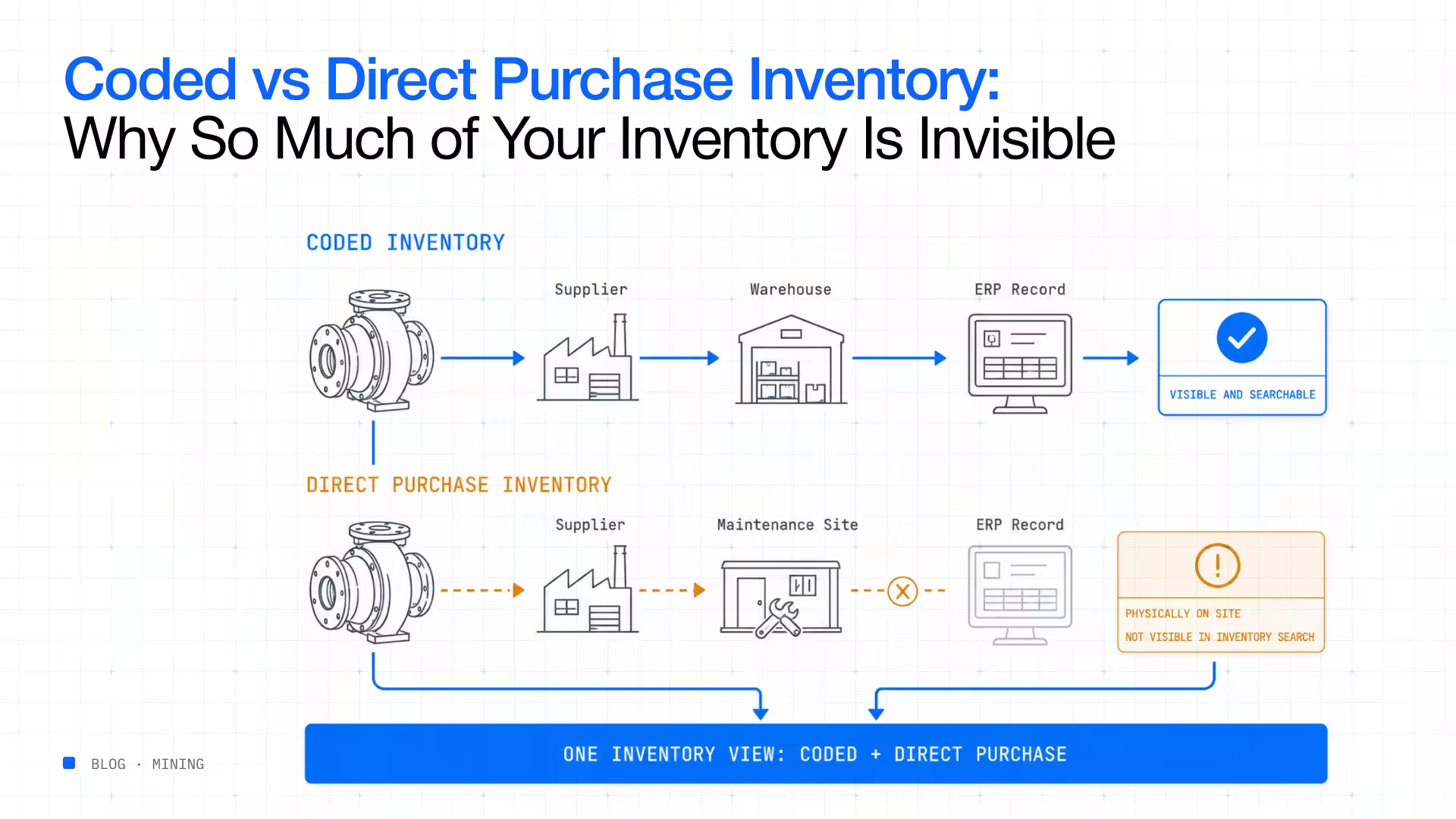
Every mining organization maintains a catalogue of approved inventory items that are stored, managed, and tracked through established warehouse processes. These coded items typically have unique item numbers, standardized descriptions, approved suppliers, and clearly defined storage locations. Because they follow structured inventory workflows, organizations can easily monitor stock levels, issue transactions, and replenishment activities.
Direct purchase inventory follows a very different path.
Instead of being received into warehouse inventory first, these materials are purchased to satisfy an immediate operational requirement. They may be delivered directly to a maintenance crew, contractor, workshop, shutdown area, or remote operational site where they are consumed without ever becoming part of the organization's managed inventory.
This process is common during emergency maintenance, shutdown activities, project work, and urgent production requirements where speed takes priority over inventory governance.
On their own, these purchases may seem insignificant. However, when organizations operate multiple mines, workshops, contractors, and remote storage locations, direct purchases gradually become a substantial portion of total inventory expenditure.
Because these materials never enter structured inventory management processes, organizations often lose visibility immediately after they are delivered.
That does not mean the inventory disappears.
It simply means the organization no longer has a reliable way of knowing where it is, who is using it, or whether similar inventory already exists elsewhere on site.
The biggest challenge with direct purchase inventory is not that it exists. The challenge is that it exists outside the inventory systems that support operational decision-making.
When inventory bypasses standard cataloguing processes, every department begins working with incomplete information.
Warehouse teams believe stock does not exist because it was never received into managed inventory.
Procurement purchases replacement materials because existing inventory cannot be located.
Maintenance planners cannot confidently identify whether required parts are already available before scheduling work.
Finance records the expenditure, but the physical inventory itself often becomes difficult to trace.
Over time, these disconnected purchases create what many organizations describe as "shadow inventory"—materials that physically exist but are operationally invisible.
This invisible inventory introduces several challenges:
Perhaps the greatest impact is on decision-making.
When leaders cannot determine how much inventory truly exists across warehouses, workshops, sea cans, laydown yards, and contractor facilities, inventory planning becomes increasingly reactive rather than strategic.
Instead of managing inventory proactively, organizations begin compensating for uncertainty by purchasing additional stock "just in case."
That approach may reduce immediate operational risk, but it quietly increases inventory investment year after year.
Direct purchase inventory rarely appears as a major problem on procurement reports because each purchase is typically justified by an immediate operational requirement. A component fails unexpectedly, a contractor requires additional materials, or a shutdown activity uncovers an unplanned maintenance need. Purchasing the required inventory immediately keeps operations moving and appears to be the right decision.
The long-term impact, however, tells a different story.
When inventory is purchased outside the standard cataloguing process, it becomes increasingly difficult to determine whether similar inventory already exists elsewhere within the operation. Procurement teams often have limited visibility into inventory held across workshops, maintenance stores, sea cans, laydown yards, contractor compounds, or neighbouring mine sites. Rather than delaying critical work while multiple locations are checked manually, they frequently approve another purchase.
This creates a cycle where inventory investment continues to increase despite sufficient inventory already being available somewhere within the business.
Over time, organizations begin accumulating:
The financial impact extends well beyond the purchase price. Every unnecessary order increases transportation costs, warehouse handling, storage requirements, insurance, and working capital. Procurement teams also spend additional time sourcing, approving, and managing purchases that could have been avoided with better inventory visibility.
Instead of investing capital in new operational initiatives, organizations gradually tie up more cash in inventory they already own but cannot confidently locate.
Industrial operations often focus material optimization efforts exclusively on cataloged, warehouse-managed inventory because those items already sit inside the ERP. However, managing coded inventory alone addresses only a portion of the operational footprint.
True material traceability requires full visibility into all inventory movements, regardless of procurement channel. Whether a component enters through planned warehouse replenishment, an emergency purchase order, a contractor delivery, or a capital project pipeline, it must integrate into a unified inventory ecosystem. Every asset requires end-to-end tracking from receipt through staging, transit, installation, and final consumption.
Scatterlink's Inventory Intelligence Platform bridges the divide between warehouse-cataloged stock and field-level direct purchases. Instead of restricting data capture to fixed warehouse gates, Scatterlink records asset movements at the point of action across the entire industrial footprint.
By unifying coded stock and direct purchases into one digital ecosystem, Scatterlink delivers real-time asset intelligence that optimizes purchasing decisions, eliminates rogue spending, and prevents costly operational delays.
Direct purchase inventory is not inherently a problem. In many mining environments, it is an operational necessity that keeps maintenance activities moving and minimizes production delays. The challenge arises when these purchases remain outside structured inventory management processes, creating inventory that exists physically but remains invisible operationally.
As organizations grow, these visibility gaps become increasingly expensive. Duplicate purchases, fragmented inventory records, inconsistent reporting, and unnecessary working capital all stem from the same underlying issue: incomplete inventory visibility.
By bringing coded inventory and direct purchase materials together within a single inventory intelligence platform, organizations gain a complete understanding of what inventory they own, where it is located, and how it is being used. This enables better procurement decisions, improves maintenance planning, reduces excess inventory, and strengthens operational performance across every mining site.
Direct purchase inventory refers to materials purchased for immediate operational use that bypass standard warehouse inventory processes. These items are often delivered directly to maintenance teams, contractors, or operational sites without first becoming part of managed inventory.
Because direct purchase materials frequently bypass standard inventory workflows, they may not be catalogued, tracked, or visible within the organization's managed inventory records. This makes it difficult to locate existing inventory and often leads to duplicate purchasing.
Coded inventory is catalogued, standardized, and managed through warehouse inventory systems. Direct purchase inventory is typically acquired for immediate operational requirements and may not be entered into managed inventory before being consumed or installed.
Mining organizations can improve visibility by capturing every inventory movement digitally, regardless of how inventory enters the business. Integrating direct purchase materials with real-time inventory visibility helps reduce duplicate purchases, improve inventory accuracy, and strengthen procurement and maintenance planning.
%20(1).avif)
.avif)
%20(1).avif)