
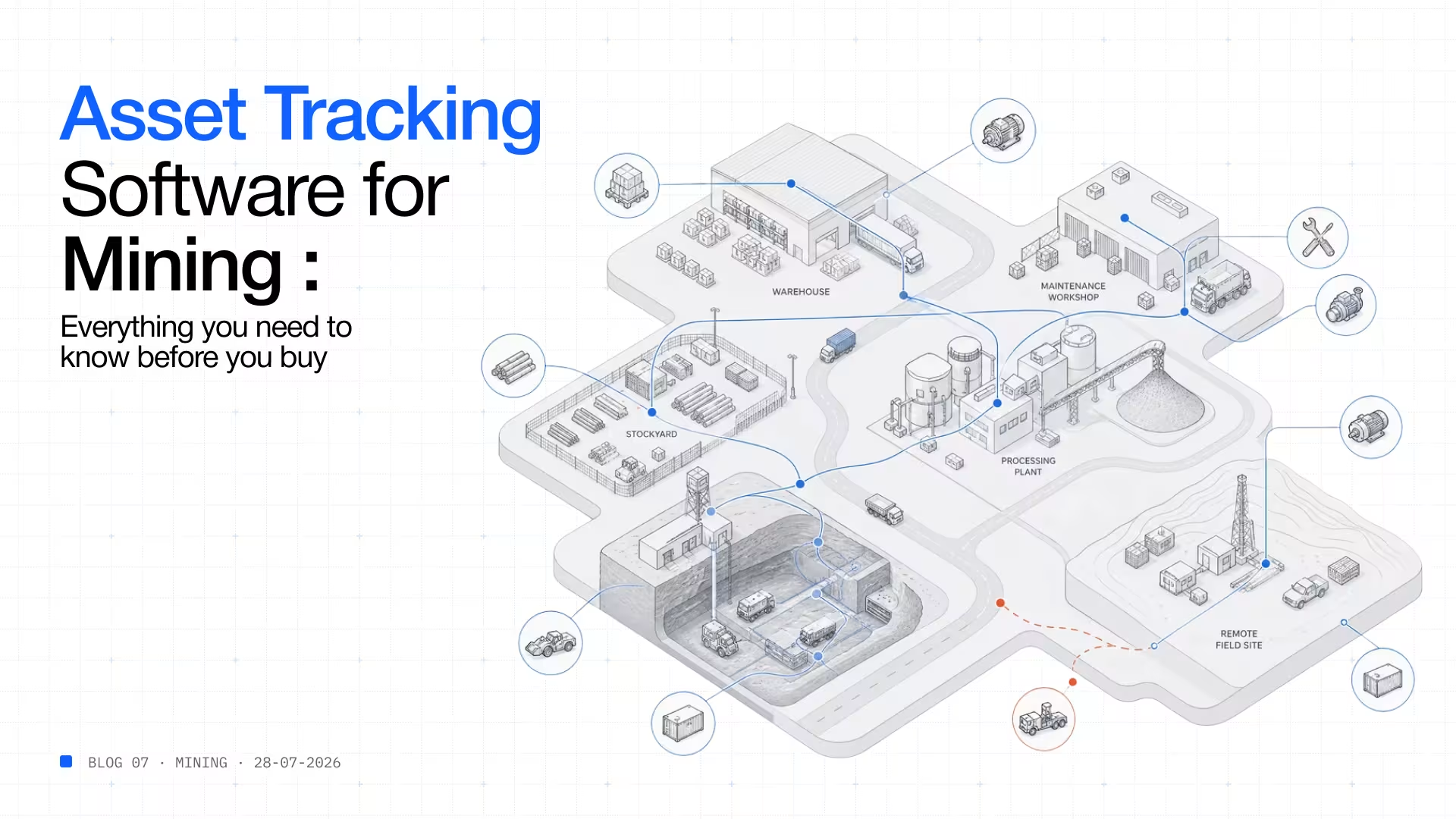
Mining operations depend on thousands of physical assets to keep production moving. From mobile equipment and maintenance tools to high-value components and operational inventory, every asset plays a role in maintaining productivity and minimizing downtime.
However, tracking these assets across large mine sites, processing facilities, warehouses, workshops, and remote locations remains a significant challenge. Assets are frequently moved, shared between teams, or temporarily stored in different locations, making manual tracking increasingly difficult.
This is why many mining organizations are investing in asset tracking software for mining. Modern tracking solutions provide real-time visibility into asset location, movement, and utilization, helping organizations reduce losses, improve accountability, and make more informed operational decisions.
This guide explains how mining asset tracking works, the features to look for, and how to choose the right solution for your operation.
Mining environments are unlike traditional warehouse operations.
Equipment, tools, and operational assets constantly move between workshops, warehouses, stockyards, underground operations, maintenance facilities, and field locations. Without accurate tracking, organizations often spend valuable time locating equipment, verifying availability, or replacing items that already exist elsewhere.
Poor visibility affects more than inventory records. It impacts maintenance scheduling, equipment utilization, procurement decisions, and operational productivity.
Implementing a mining asset tracking system provides organizations with greater control over valuable operational assets while improving efficiency across multiple departments.
Many mining companies still rely on spreadsheets, barcode labels, manual sign-out sheets, or employee knowledge to track assets.
While these methods may appear manageable, they become increasingly unreliable as operations expand.
Common challenges include:
These challenges increase operational costs while reducing confidence in operational information.
Gain complete visibility into mining equipment, tools, and operational assets. Discover how Scatterlink helps mining organizations track assets in real time across every operational location.
Selecting the right asset management software for the mining industry requires more than simply tracking asset locations.
Modern mining operations should look for features that improve operational visibility while supporting existing workflows.
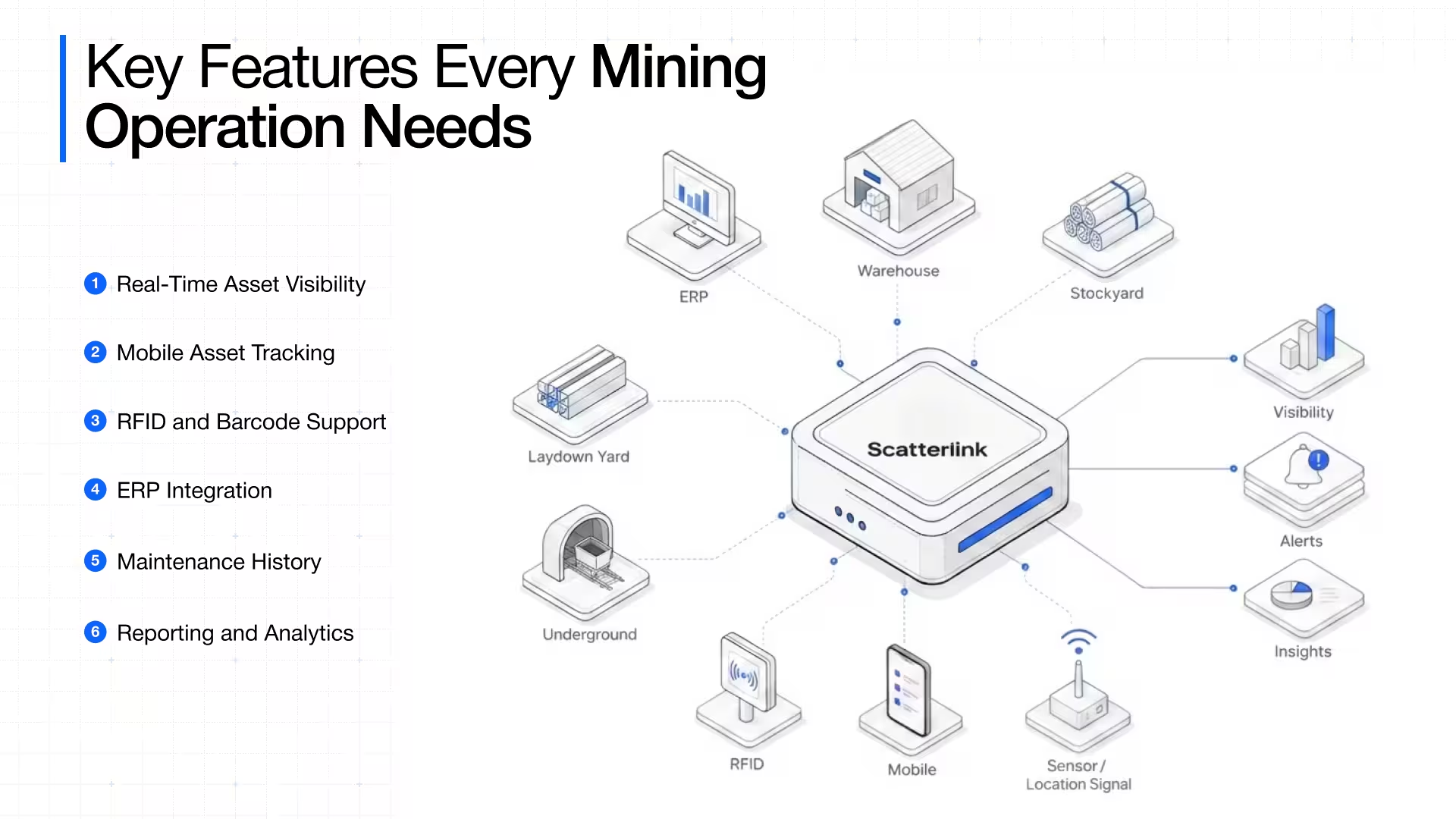
Essential capabilities include:
1. Real-Time Asset Visibility
Know where assets are located without relying on manual searches.
2. Mobile Asset Tracking
Allow field teams to update asset movements using mobile devices while working on-site.
3. RFID and Barcode Support
Support multiple identification technologies depending on operational requirements.
4. ERP Integration
Synchronize asset information with existing enterprise systems to improve reporting and operational consistency.
5. Maintenance History
Maintain a complete record of asset movement, usage, inspections, and maintenance activities.
6. Reporting and Analytics
Understand utilization trends, movement history, and operational performance using real-time reports.
These capabilities enable organizations to manage assets proactively rather than reactively.
Several technologies are commonly used within industrial asset tracking systems. Each offers different advantages depending on the type of asset being tracked
Many mining organizations combine these technologies to create a comprehensive asset tracking strategy. For example, GPS may monitor heavy mobile equipment while RFID tracks maintenance tools, consumables, and warehouse inventory. Choosing the right combination depends on operational objectives, site conditions, and asset types.
Real-time visibility allows organizations to move beyond simply knowing what assets they own.
It enables teams to understand where assets are located, how frequently they are used, and whether they are available when needed.
Benefits include:
Instead of relying on assumptions, organizations can make decisions using accurate operational information.
Real-time visibility helps mining operations reduce search time and improve equipment utilization. Learn how Scatterlink delivers accurate, intelligent, and actionable asset information.
Not every real-time asset tracking mining solution offers the same capabilities.
Before investing in a platform, organizations should evaluate whether it can support both current and future operational requirements.
Consider asking:
Selecting software that aligns with operational workflows improves adoption while maximizing long-term value.
Traditional asset tracking focuses on answering one question:
Where is the asset?
Modern mining organizations require much more than location information. They need to understand asset availability, operational status, utilization history, maintenance activity, and the inventory supporting those assets. This shift is driving organizations toward Inventory Intelligence Platforms that combine asset tracking with inventory visibility, operational workflows, and actionable insights. Instead of simply locating assets, organizations gain the information needed to improve operational performance, reduce downtime, and support faster decision-making.
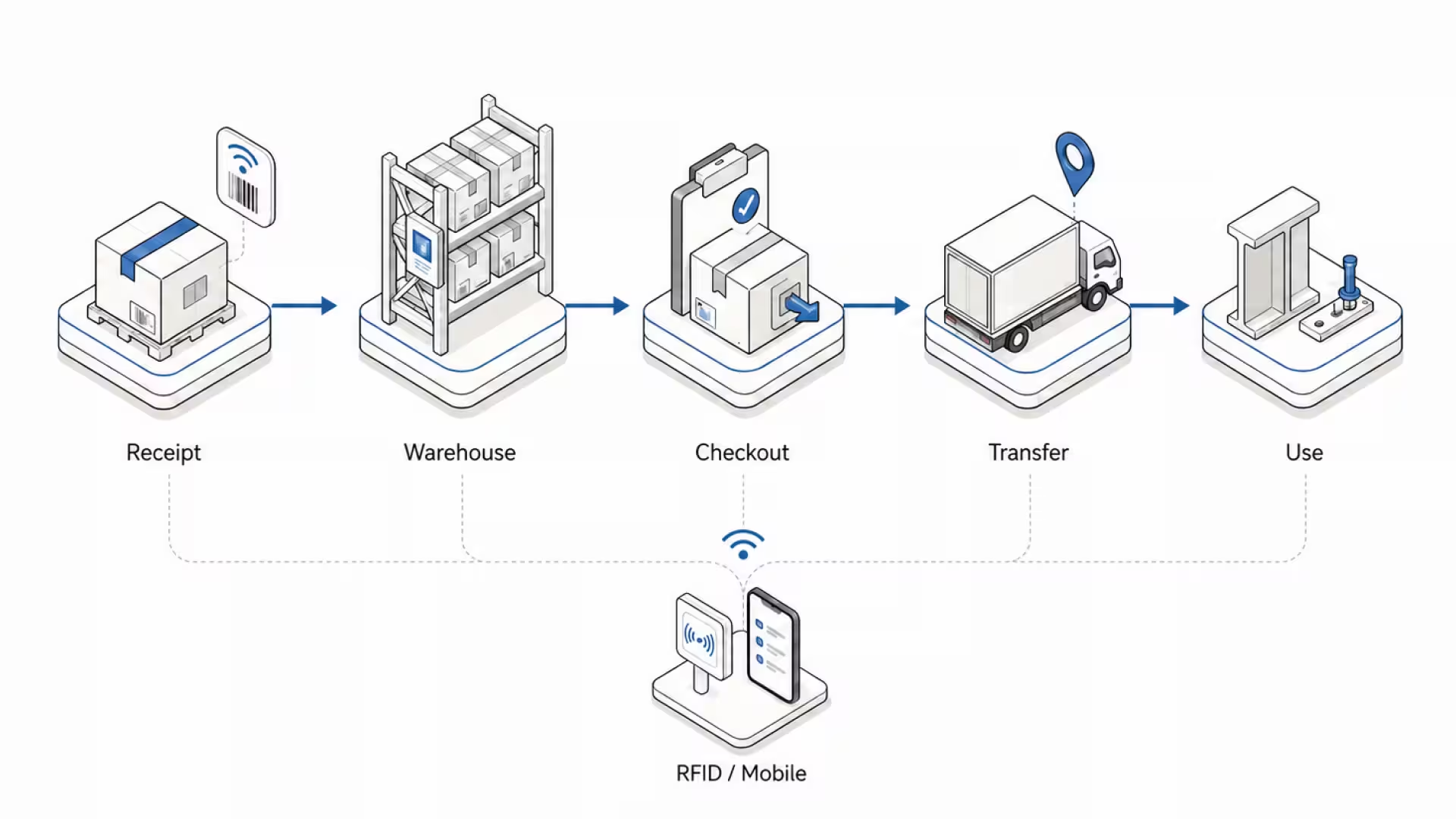
Scatterlink helps mining organizations move beyond traditional asset tracking.
By combining RFID technology, barcode scanning, IoT devices, mobile workflows, and seamless ERP integration, Scatterlink provides real-time visibility into both assets and inventory across warehouses, workshops, stockyards, and remote operations.
The platform is designed for rapid adoption with intuitive workflows that require minimal training, enabling frontline workers, supervisors, and operational leaders to access accurate, intelligent, and actionable information whenever decisions need to be made.
Rather than simply tracking assets, Scatterlink helps organizations improve operational visibility across the entire mining operation.
Looking for an asset tracking solution built for mining? Explore how Scatterlink helps organizations improve asset visibility, accountability, and operational performance through Inventory Intelligence
Mining organizations operate in environments where equipment availability and asset visibility directly influence productivity, maintenance performance, and operational continuity.
Implementing the right asset tracking software for mining enables organizations to reduce search time, improve accountability, optimize asset utilization, and strengthen operational decision-making.
As mining operations continue to become more connected, organizations that combine real-time asset tracking with inventory intelligence will be better positioned to improve efficiency while reducing operational risk.
Asset tracking software for mining helps organizations monitor the location, movement, utilization, and status of equipment, tools, and operational assets across mining operations.
Mining organizations commonly use RFID, GPS, barcode scanning, IoT devices, and mobile applications to track assets in real time.
Real-time tracking improves visibility, reduces equipment search time, supports maintenance planning, increases accountability, and improves operational efficiency.
Yes. Many modern asset tracking platforms integrate with ERP systems to synchronize asset information, maintenance records, and operational reporting.
Scatterlink combines RFID, barcode scanning, IoT technology, mobile workflows, and ERP integration to provide real-time visibility into assets and inventory across mining operations.
%20(1).avif)
.avif)
%20(1).avif)