
Managing inventory effectively is about more than knowing how much stock you have. Organizations also need to understand which inventory items deserve the highest level of attention. Treating every inventory item the same often leads to unnecessary carrying costs, stockouts, and inefficient use of warehouse space.
This is why many businesses use ABC-XYZ Analysis. By combining inventory value with demand variability, organizations can prioritize inventory more effectively, improve procurement decisions, and allocate resources where they create the greatest operational value.
However, inventory classification is only one part of effective inventory management. Once inventory has been prioritized, organizations must also ensure that critical inventory remains visible, accessible, and available when operations depend on it.
ABC Analysis is an inventory classification method that groups inventory according to its financial value or business importance. It is based on the Pareto Principle, which suggests that a relatively small percentage of inventory often accounts for the majority of inventory value.
Inventory is divided into three categories:
For example, a mining operation may classify a replacement gearbox as an A item because of its high cost and operational importance, while bolts, gloves, or cleaning supplies may fall into the C category.
ABC Analysis helps organizations focus their inventory management efforts where they have the greatest financial impact.
While ABC Analysis focuses on value, XYZ Analysis focuses on demand patterns. It categorizes inventory according to how predictable its usage is over time.
The three categories include:
For example, maintenance consumables used every week may qualify as X items, while emergency replacement components used only during unexpected equipment failures may fall into the Z category.
Understanding demand variability helps organizations develop more effective purchasing and stocking strategies.
Although they are often discussed together, ABC and XYZ Analysis answer different business questions.
When combined, these two methods provide a much more complete understanding of inventory priorities.
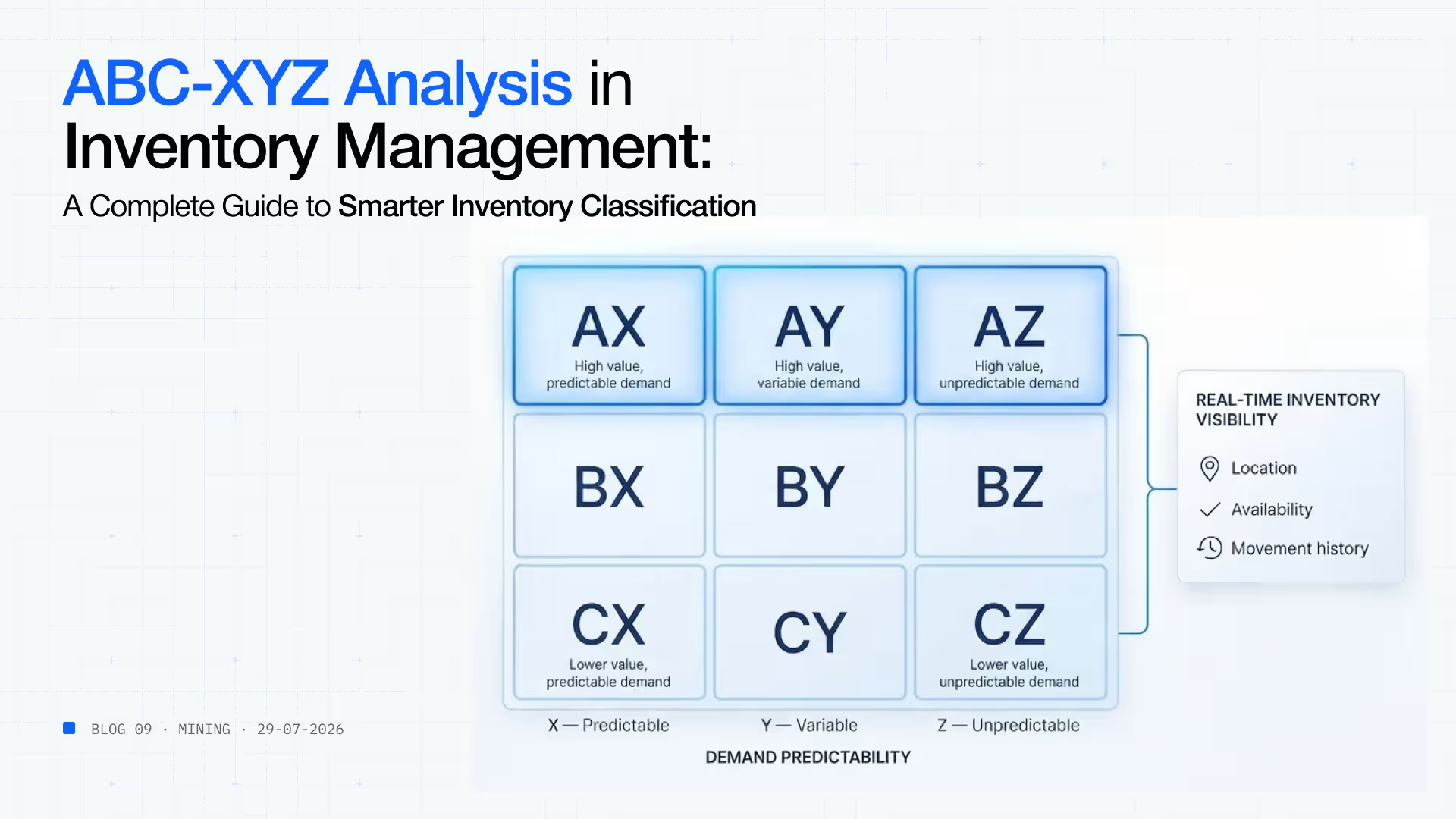
Combining both analyses creates a nine-category inventory matrix.
The matrix allows organizations to apply different inventory strategies based on both business value and operational demand instead of relying on a one-size-fits-all approach.
Organizations use ABC-XYZ Analysis because it helps improve both inventory planning and operational efficiency.
Key benefits include:
Rather than spreading resources evenly across every inventory item, businesses can concentrate their efforts on inventory that has the greatest financial and operational impact.
Classifying inventory is the first step toward better inventory management. Learn how we help organizations maintain visibility into their highest-priority inventory throughout its lifecycle.
ABC-XYZ Analysis is an excellent planning framework, but it does not solve every inventory challenge.
The analysis tells organizations which inventory items are important, but it does not answer operational questions such as:
For example, an AX item may be identified as business-critical. However, if technicians spend 30 minutes searching for it during a scheduled shutdown, the classification has not prevented operational delays.
Planning inventory and locating inventory are two different challenges.
Once inventory has been classified, maintaining visibility becomes equally important.
High-priority inventory often moves between warehouses, maintenance workshops, laydown yards, remote storage areas, surface operations, and underground sites. Every movement creates another opportunity for inventory records and physical inventory to become disconnected.
Without continuous visibility, organizations may know exactly which inventory is most important while still struggling to locate it when work begins.
This disconnect contributes to longer search times, duplicate purchasing, delayed maintenance activities, and lower confidence in inventory records.
Your highest-priority inventory should also be your most visible inventory. Discover how we assist teams locate critical inventory quickly across warehouses, stockyards, and operational sites!
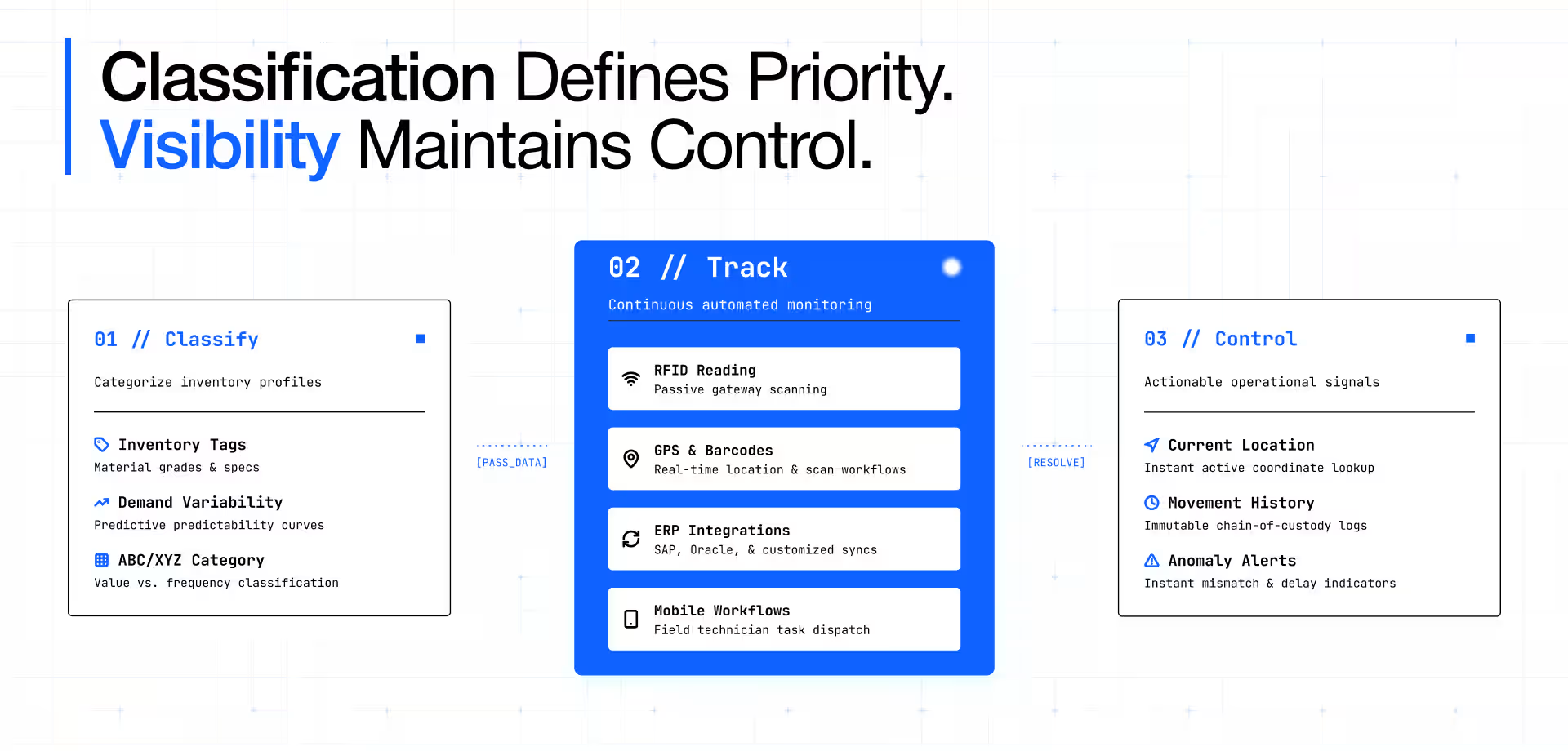
Organizations achieve the greatest value from ABC-XYZ Analysis when inventory classification is combined with real-time inventory visibility.
Technologies such as RFID, barcode scanning, mobile inventory workflows, GPS-enabled location tracking, and ERP integration allow businesses to monitor inventory as it moves throughout its operational lifecycle.
Instead of relying solely on periodic inventory counts or manual updates, teams gain immediate access to current inventory locations, movement history, and availability. This enables faster maintenance decisions, more accurate inventory records, and greater confidence across warehouse, procurement, and operations teams.
ABC-XYZ Analysis delivers better results when it becomes part of an ongoing inventory management strategy rather than a one-time exercise.
Organizations should consider the following best practices:
Together, these practices help ensure inventory classifications remain accurate and actionable.
ABC-XYZ Analysis helps you decide which inventory deserves the highest level of control. Scatterlink helps you maintain that control with real-time inventory visibility across warehouses, stockyards, surface operations, and underground sites.
ABC-XYZ Analysis remains one of the most effective methods for prioritizing inventory based on value and demand variability. It enables organizations to make better purchasing decisions, improve inventory planning, and allocate resources more strategically.
However, effective inventory management does not end with classification. Once critical inventory has been identified, organizations must ensure it can be located, tracked, and accessed without delay. By combining ABC-XYZ Analysis with real-time inventory visibility, businesses can bridge the gap between inventory planning and operational execution, ensuring that their most important inventory is always available when it is needed most.
ABC-XYZ Analysis is an inventory classification technique that combines ABC Analysis, based on inventory value, with XYZ Analysis, based on demand variability. Together, they help organizations prioritize inventory management strategies more effectively.
ABC Analysis classifies inventory according to financial value, while XYZ Analysis classifies inventory according to the predictability of demand. Combining both methods provides a more complete picture of inventory priorities.
ABC-XYZ Analysis helps organizations prioritize inventory, optimize stock levels, improve procurement planning, reduce carrying costs, and allocate inventory management resources more efficiently.
An AX item is a high-value inventory item with consistent and predictable demand. These items typically require the highest level of inventory control and operational visibility.
Not by itself. ABC-XYZ Analysis identifies which inventory items require the greatest attention, but organizations still need real-time inventory tracking to know where those items are located throughout their operational lifecycle.
RFID inventory management uses radio frequency identification (RFID) technology to automatically identify, locate, and track inventory throughout its lifecycle. Compared to manual inventory processes and barcode-only systems, RFID provides faster inventory counts, improved inventory accuracy, and real-time visibility across warehouses, stockyards, field locations, and industrial operations.
RFID asset tracking software helps organizations monitor inventory and equipment in real time by combining RFID tags, readers, mobile applications, and centralized inventory intelligence. It reduces manual data entry, shortens inventory search time, improves inventory accuracy, and provides complete visibility across multiple operational locations.
Mining operations manage inventory across warehouses, stockyards, sea cans, laydown yards, workshops, field locations, and underground environments. Purpose-built asset tracking software for mining, mining asset tracking platforms, and mining equipment tracking systems provide real-time visibility, offline mobile capability, and RFID-based tracking that traditional warehouse management systems are not designed to support.
%20(1).avif)
.avif)
%20(1).avif)