
Explosives inventory management is not a process that can afford gaps in visibility. Mining operations need to know what inventory they have, where it is held, what has moved and what has been issued or consumed. When this information is spread across paper records, spreadsheets and disconnected systems, maintaining an accurate inventory position becomes significantly harder.
This is why choosing explosives inventory management software should be approached as an operational decision rather than simply a technology purchase. The right system should connect physical inventory movements with reliable digital records and give authorised users the information they need without forcing teams to reconstruct the inventory position manually.
For mining operations, the most useful software is not necessarily the platform with the longest feature list. It is the one that supports the actual explosives inventory lifecycle, from receipt and storage through movement, issue, reconciliation and consumption, while providing visibility across the locations where the operation works.
Explosives inventory management software is a digital system used to record, control and track explosives inventory throughout its operational lifecycle.
Depending on the platform and configuration, this can include receiving inventory, managing magazine stock, recording transfers, tracking issues and returns, maintaining transaction histories, supporting stocktaking and reconciling physical inventory against recorded quantities.
For mining operations, the software should provide more than a digital stock register. It should connect inventory transactions and locations so authorised users can understand both the current stock position and the activity that created it.
Explosives inventory can move through multiple locations and workflows before it is consumed. Managing these movements manually can create delays between physical activity and the corresponding inventory record.
A disconnected process can also make it difficult to establish whether a discrepancy is caused by an actual stock difference, an incorrect transaction or inventory being recorded against the wrong location.
Digital inventory management can provide a structured way to capture these activities. When transactions, locations and inventory balances are connected, teams have a stronger foundation for maintaining accurate records and investigating discrepancies.
The right software should address the practical challenges of explosives inventory management rather than simply digitise existing paperwork.
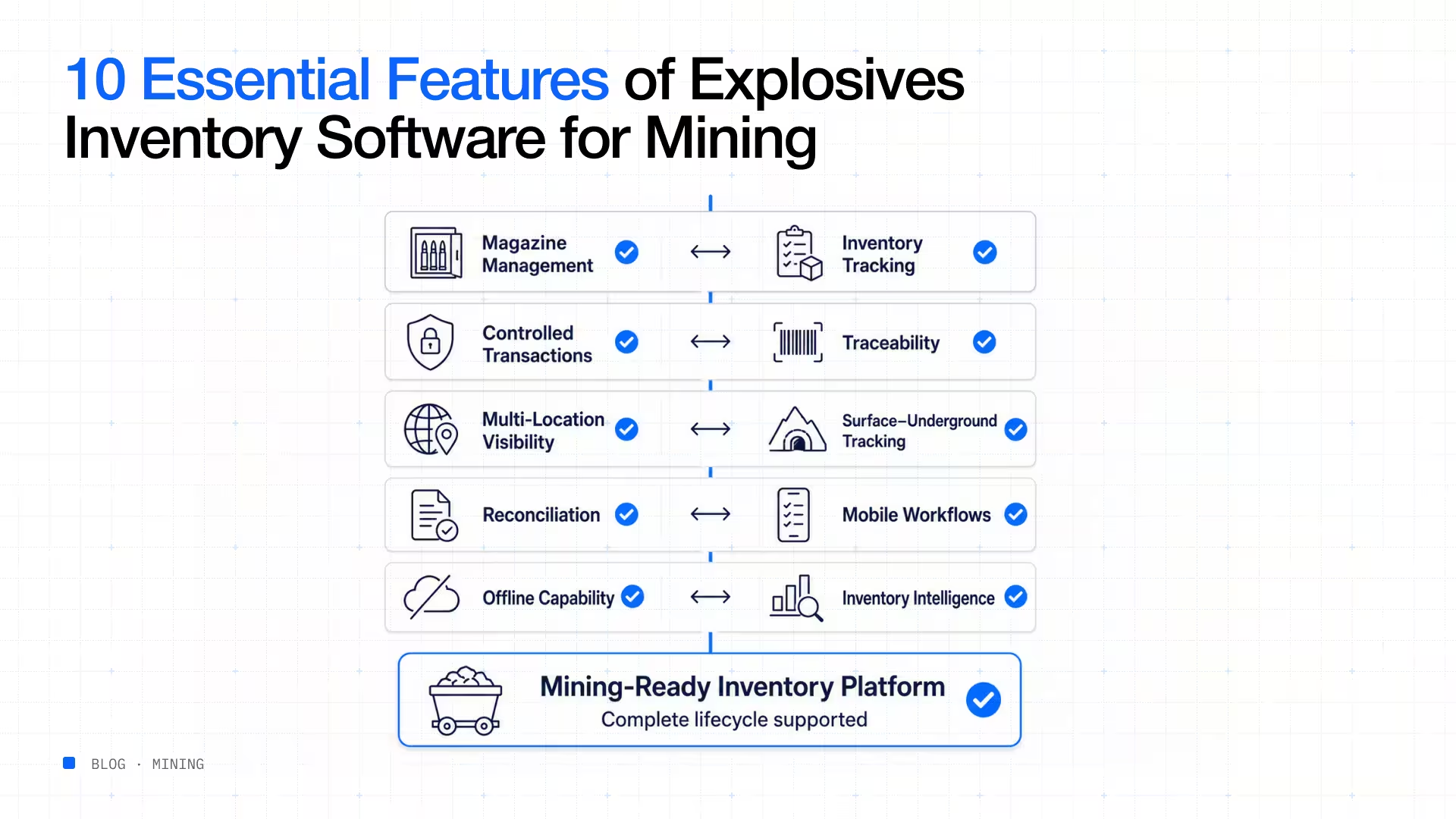
Here are 10 features mining operations should evaluate when selecting an explosives inventory management system.
Magazine-level inventory management is fundamental to explosives control. Mining operations need to know what inventory is recorded at each authorised storage location rather than relying only on a total stock figure.
The software should allow inventory to be associated with the appropriate magazine and maintain a clear balance as stock is received, transferred, issued or returned.
This location-level visibility becomes particularly important when operations manage multiple magazines across different areas or sites.
If magazine-level visibility is a priority, explore MagControl to see how Scatterlink supports digital explosives inventory management across mining operations.
A current inventory balance only tells part of the story. Mining operations also need visibility into how inventory moved to reach that balance.
Explosives inventory tracking should provide a clear history of relevant movements, including receiving, transfers, issues and returns. This allows authorised users to understand what happened to inventory rather than relying solely on the current quantity.
Tracking becomes even more valuable when inventory moves between surface and underground locations. A connected record can help maintain continuity as inventory moves through different parts of the operation.
Every inventory movement can affect the accuracy of the stock record. Software should therefore provide structured workflows for recording relevant transactions rather than relying on unrestricted manual updates.
Controlled transactions can help ensure that inventory movements are captured consistently and associated with the appropriate location and inventory record.
This also creates greater accountability around changes to inventory. Instead of simply changing a quantity, the system can maintain the transaction context behind the change.
Traceability is particularly important when mining operations need to understand the history of inventory movements. Software should maintain a record of relevant transactions so authorised users can review how inventory has moved through the operation.
A transaction history can also support discrepancy investigation. When physical inventory does not match the recorded balance, teams can review the relevant activity instead of starting from scratch.
The value of traceability comes from connecting individual transactions into a coherent inventory history.
Mining operations may manage explosives across multiple magazines, sites and operating environments. Software should therefore provide visibility across locations without forcing teams to maintain disconnected inventory records.
A multi-location system can allow authorised users to view individual magazine balances while also understanding the broader inventory position.
This becomes especially important when inventory moves between surface and underground locations. The physical locations remain separate, but the inventory information can remain connected.
Surface and underground environments can have very different operating conditions. A suitable inventory system should be able to support both without creating separate and disconnected inventory processes.
This includes maintaining location-level visibility, recording transfers and supporting mobile workflows where inventory activity occurs away from fixed workstations.
For operations working across both environments, surface and underground visibility should be part of the core inventory architecture rather than an afterthought.
Managing explosives across both surface and underground locations? Explore MagControl to see how Scatterlink connects inventory visibility across mining environments.
Even with strong digital controls, physical verification remains an important part of inventory management. Software should support stocktaking and provide a structured way to compare physical quantities with recorded inventory.
When discrepancies are identified, the system should provide enough information to investigate them. Transaction history, location information and inventory records can help teams determine where the physical and digital records diverged.
This turns reconciliation into an ongoing inventory control process rather than simply a periodic exercise.
Inventory activity does not always happen at a desktop. Mining teams may need to record transactions at magazines, underground locations or other operational areas.
Mobile inventory workflows allow authorised users to capture relevant activity closer to where it physically occurs. This can reduce the reliance on handwritten notes and later manual data entry.
For mining operations, mobile capability should be practical and simple enough to support consistent adoption across different working environments.
Connectivity cannot always be assumed across underground mining environments. Software that depends entirely on continuous connectivity may therefore create gaps in inventory recording.
Offline capability can allow authorised users to capture relevant inventory activity when a live connection is unavailable and synchronise the information when connectivity is restored, according to the system’s configuration.
This can help maintain continuity between underground activity and the broader inventory record.
The final feature to consider is what the software does with the inventory information it captures.
A system should not simply store transactions. It should help authorised users understand the inventory position, identify discrepancies and access the information required to make operational decisions.
This is where inventory management moves towards inventory intelligence. The objective is to turn inventory data into accurate, actionable information that teams can use without spending excessive time manually analysing disconnected records.
If you are looking for explosives inventory software that goes beyond basic stock records, explore MagControl to see how Scatterlink combines inventory visibility, controlled transactions and operational intelligence.
Even a technically advanced system can fail to improve inventory accuracy if users struggle to operate it. Complex workflows can encourage teams to delay transactions, rely on workarounds or continue using manual records alongside the software.
The system should make common inventory activities straightforward. Users should be able to access the information relevant to their role and complete authorised transactions without unnecessary administrative steps.
Ease of use is therefore not simply a user-experience consideration. It can directly influence how consistently inventory information is captured.
Features should always be evaluated in the context of the actual inventory process. A system may offer extensive functionality, but if it does not connect receiving, storage, movement, issue, reconciliation and consumption into one workflow, the operation may still experience visibility gaps.
Mining operations should also consider how the software works across different locations and connectivity conditions. Surface and underground teams may require different access methods while still contributing to the same inventory record.
The best solution is ultimately one that combines strong inventory controls with practical workflows that operational teams can use consistently.
Choosing explosives inventory software should start with the operational problems the system needs to solve. A platform may offer extensive features, but if it does not make it easier to control inventory movements, maintain accurate magazine records and understand stock across locations, it may simply digitise an existing problem.
Mining operations should therefore evaluate the software against the full inventory lifecycle. Consider how the system handles receiving, storage, transfers, issues, returns, consumption, stocktaking and reconciliation, rather than assessing each feature in isolation.
The most useful solution should also provide a consistent experience across the people and locations involved in inventory management. This becomes particularly important when inventory is managed across surface and underground operations.
Inventory accuracy should be one of the first criteria when evaluating an explosives inventory system. A platform should make it easier to maintain a reliable relationship between physical stock and recorded stock.
Look at how the system handles inventory adjustments, transfers, stocktakes and discrepancies. A strong workflow should provide context around changes instead of allowing quantities to be changed without a clear transaction history.
The objective is not simply to display an accurate number. It is to create a process that helps keep that number accurate as inventory moves through the operation.
A good inventory platform should allow authorised users to understand more than the total quantity available. They should be able to see where inventory is recorded, what movements have occurred and what transactions have affected the current balance.
This is particularly important when explosives are distributed across multiple magazines or sites. Without location-level visibility, teams may have to combine separate records before they can establish the overall inventory position.
Multi-location visibility allows users to move between the broader inventory picture and the specific location that requires attention.
The inventory lifecycle should be considered when assessing explosives management software. Receiving inventory is only the beginning. The system should support the relevant movements and transactions that occur before inventory is ultimately consumed.
A connected lifecycle creates continuity between each stage. Inventory received into a magazine can be connected to subsequent transfers, issues, returns and other relevant transactions.
This gives authorised users a clearer understanding of how the current stock position was established and where inventory has moved throughout the operation.
Transaction control is an important distinction between a basic digital register and a structured inventory management system. Users should not simply be able to change stock quantities without an appropriate transaction.
Controlled workflows can help ensure that inventory movements are recorded consistently and against the correct locations. They can also provide greater accountability around changes to inventory records.
This is particularly valuable when multiple people are responsible for inventory activities across different locations.
An audit trail provides the history behind the inventory record. When an inventory balance changes, authorised users should be able to understand what transaction or activity contributed to that change.
This becomes especially useful when investigating discrepancies. Instead of relying on memory or searching through separate records, teams can review the relevant transaction history within the inventory system.
For mining operations, the audit trail should therefore be considered part of inventory control, not simply a reporting feature.
Mining inventory management does not happen exclusively in an office. Teams may need to record inventory activity at magazines, storage locations and operational areas.
Mobile workflows can allow authorised users to capture transactions closer to where physical inventory activity takes place. This can reduce the delay between a movement occurring and the inventory record being updated.
A practical mobile experience can also reduce reliance on paper notes and duplicate data entry, helping teams maintain a more consistent digital record.
If your inventory teams need to capture transactions closer to where inventory moves, explore MagControl to see how Scatterlink supports mobile explosives inventory workflows.
For operations working underground, connectivity should be considered when evaluating inventory software. Not every location will necessarily provide continuous access to the network.
Offline functionality can allow authorised users to capture relevant inventory activity without an active connection and synchronise information when connectivity becomes available, according to the system’s configuration.
This can help prevent underground inventory activity from becoming disconnected from the central inventory record.
Reconciliation should not be treated as an isolated stocktake exercise. The software should help teams compare recorded inventory with physical stock and investigate differences when they occur.
Transaction history and location information can provide useful context when a discrepancy is identified. Teams can review relevant movements rather than simply adjusting the recorded quantity to match the physical count.
A strong reconciliation workflow can therefore help identify recurring inventory problems and improve accuracy over time.
For mining operations working across surface and underground environments, this should be a core evaluation criterion.
The system should allow individual locations and magazines to retain their own inventory records while contributing to one broader inventory view. This avoids forcing teams to maintain separate systems for different operating environments.
Transfers between surface and underground locations should also remain connected within the inventory history. This provides greater visibility into how stock moves across the operation.
Managing explosives across surface and underground locations? Explore MagControl to see how Scatterlink connects inventory visibility across mining environments.
RFID can add automated identification to suitable inventory workflows. However, mining operations should evaluate how RFID integrates with the inventory platform rather than assessing it as a standalone technology.
The important question is what happens after an RFID event is captured. Can the information be associated with the correct inventory record, location and transaction? Can it contribute to the broader inventory history?
When RFID data is connected to inventory management software, it can become part of a wider process for tracking and tracing inventory.
Reporting should help users understand inventory rather than simply produce large amounts of data. The most useful reports are those that provide visibility into stock positions, movements, discrepancies, transaction history and other information relevant to inventory control.
Different users may also require different levels of detail. An inventory manager may need a broader operational view, while a user investigating a discrepancy may need transaction-level information.
The software should therefore make relevant information accessible without requiring teams to manually compile it from multiple sources.
Ease of use is an operational consideration, not just a design preference. If recording an inventory transaction takes too many steps, users may delay the activity or rely on alternative processes.
The system should make common tasks straightforward and intuitive. Users should be able to access the information relevant to their responsibilities and complete authorised transactions without unnecessary complexity.
This can have a direct impact on data quality because the easier the workflow is to follow, the more consistently teams can use it.
Before selecting a platform, mining operations should ask:
These questions help shift the evaluation from “What features does the software have?” to “Can this software actually improve how we manage explosives inventory?”
The right platform should bring together inventory accuracy, location visibility, transaction control and traceability within one connected workflow.
It should support the physical reality of mining operations, including multiple magazines, surface and underground environments, mobile users and variable connectivity. It should also provide enough flexibility to integrate relevant technologies without making the inventory process unnecessarily complicated.
Most importantly, the software should help teams move from fragmented inventory records to accurate, actionable information. That is what turns explosives inventory software from a digital register into an operational inventory management system.
Looking for a digital platform built around explosives inventory visibility and control? Explore MagControl to see how Scatterlink supports the complete inventory workflow.
Choosing explosives inventory software is ultimately about finding a system that can keep up with the way inventory actually moves through a mining operation.
The strongest solution should connect magazines, locations, transactions and inventory history while supporting the practical requirements of surface and underground teams. It should reduce unnecessary manual work without compromising the controls needed to maintain accurate records.
When these capabilities work together, mining operations can move beyond simply recording inventory. They can build a clearer, more connected view of what they have, where it is, how it moved and what action may be required.
Want to see what connected explosives inventory management looks like? Visit Scatterlink to learn more.
It is software designed to digitally manage explosives inventory, including stock records, locations, movements, transactions, reconciliation and inventory history.
Important capabilities can include magazine inventory management, inventory tracking, controlled transactions, traceability, multi-location visibility, reconciliation, mobile access, offline functionality and reporting.
Yes. Suitable platforms can support underground inventory through location-level records, mobile workflows and offline functionality where required.
Magazine-level records show where inventory is recorded rather than only providing an overall stock quantity. This improves location visibility and supports reconciliation.
Yes. Inventory software can record relevant movements such as transfers, issues and returns and maintain these activities within the transaction history.
No. RFID is one technology that can support automated identification and tracking. The broader inventory management process should remain functional regardless of whether RFID is used.
Physical stock can be compared with the recorded inventory position, while transaction and location history can help users investigate discrepancies.
Underground connectivity may vary. Offline capability can allow authorised users to capture relevant inventory activity without an active connection and synchronise it later, according to the system’s configuration.
It connects inventory records, locations, transactions and movement history so authorised users can understand the current stock position and the activity behind it.
%20(1).avif)
.avif)
%20(1).avif)