

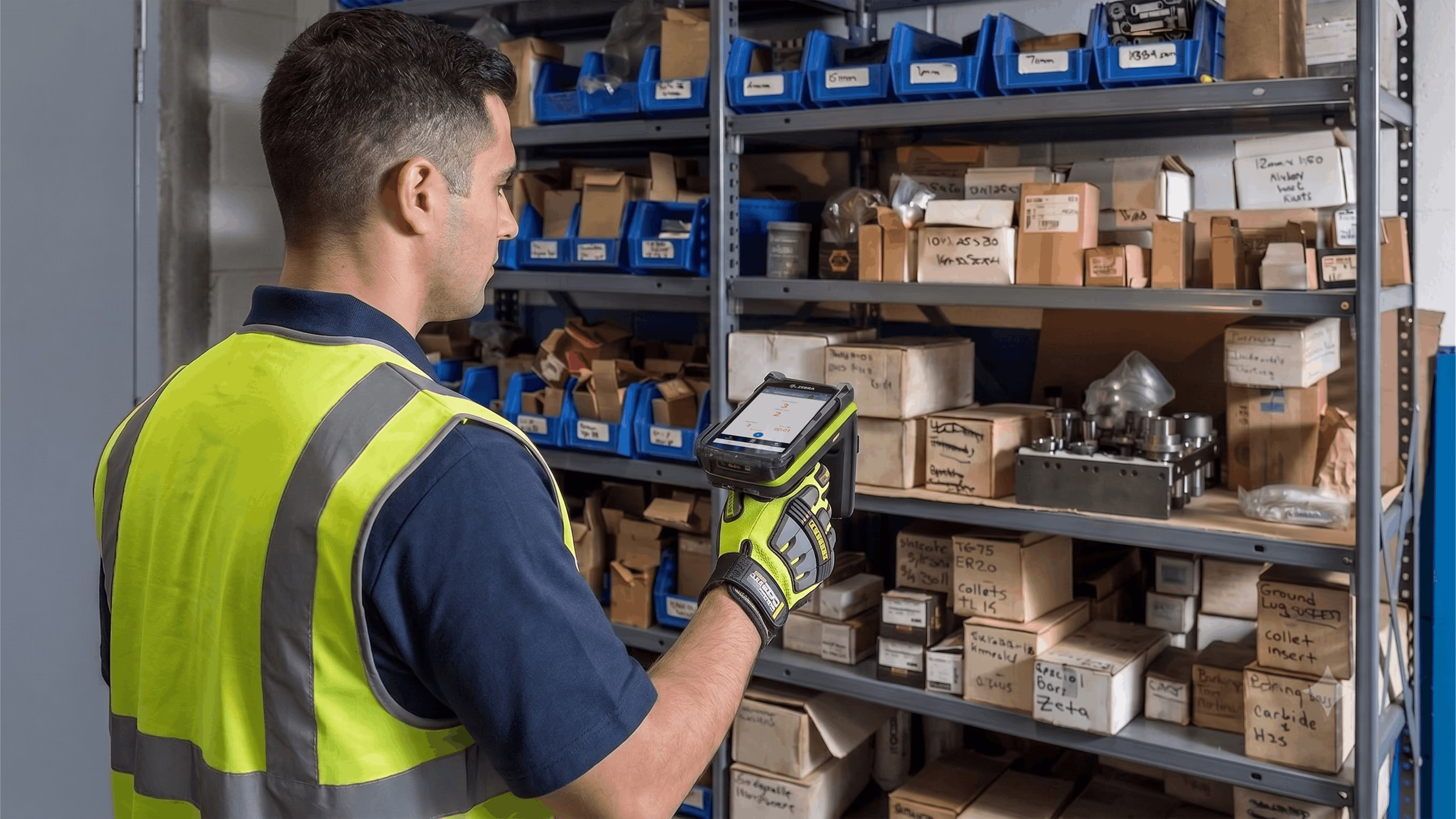
They were spending heavily on direct materials, with limited visibility into what had already been purchased, where it was stored, or how much remained. An ERP system was in place, but it had not yet earned the team's full confidence as the go-to source of truth on the ground. Materials were spread across yards and warehouses without a consistent way to locate, count, or audit them. Materials were being bought in advance, more than needed, tying up working capital that could have been put to better use.
Scatterlink deployed a field-first, RFID-powered materials visibility platform: tagging, photographing, and cataloguing direct materials across both sites, and bringing them under warehouse control for the first time.
The result?
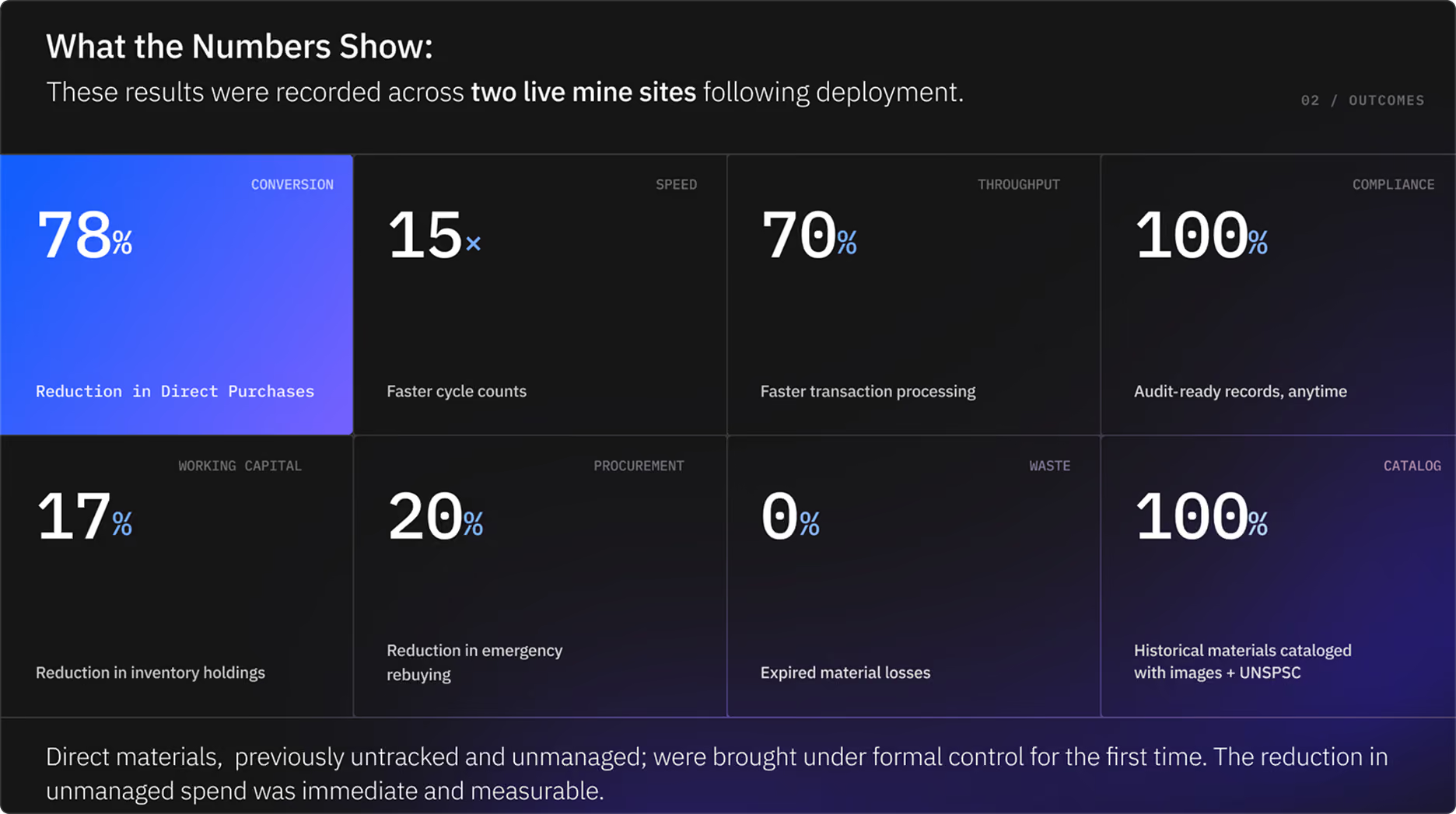
More efficient purchasing decisions, weekly RFID cycle counts running 15 times faster, and audit-ready records where none existed before.
The company's ERP implementation was still underway, so there wasn't yet a fully reliable system of record for materials on the ground. Site audits were conducted twice a year, all paper based. This gap was most visible in direct purchases: consumables and operational supplies that were being procured outside formal inventory controls entirely.
The team was rolling out a new ERP for the third time in four years, and, as with any system still finding its footing, it was working through data quality issues and duplicate items while a trusted baseline took shape. Teams leaned on familiar workarounds in the meantime rather than the system itself. There wasn't yet a consistent way to locate, count, or audit what was physically on site across either location.
As production scaled, headcount grew and procurement volumes increased. The volume of direct materials being purchased with limited tracking after arrival had grown beyond what informal record-keeping could comfortably manage. Procurement leadership recognized this as a broader, structural opportunity, not a series of isolated incidents.
Materials were reordered simply because they were hard to locate on site. The ERP was in place, but the team hadn't yet come to rely on it as their day-to-day source of truth. Warehouse staff kept their own records and supervisors relied on whoever had been there the longest. This is common in mining. However, the real question is, how much is it costing you.
What the operations and procurement teams were dealing with daily:
Scatterlink deployed a field-first materials visibility platform across both sites. The implementation was designed to work alongside existing systems, not replace them. The ERP remained untouched. What changed was the quality of information flowing into it and the speed at which field teams could act.
The Solution:
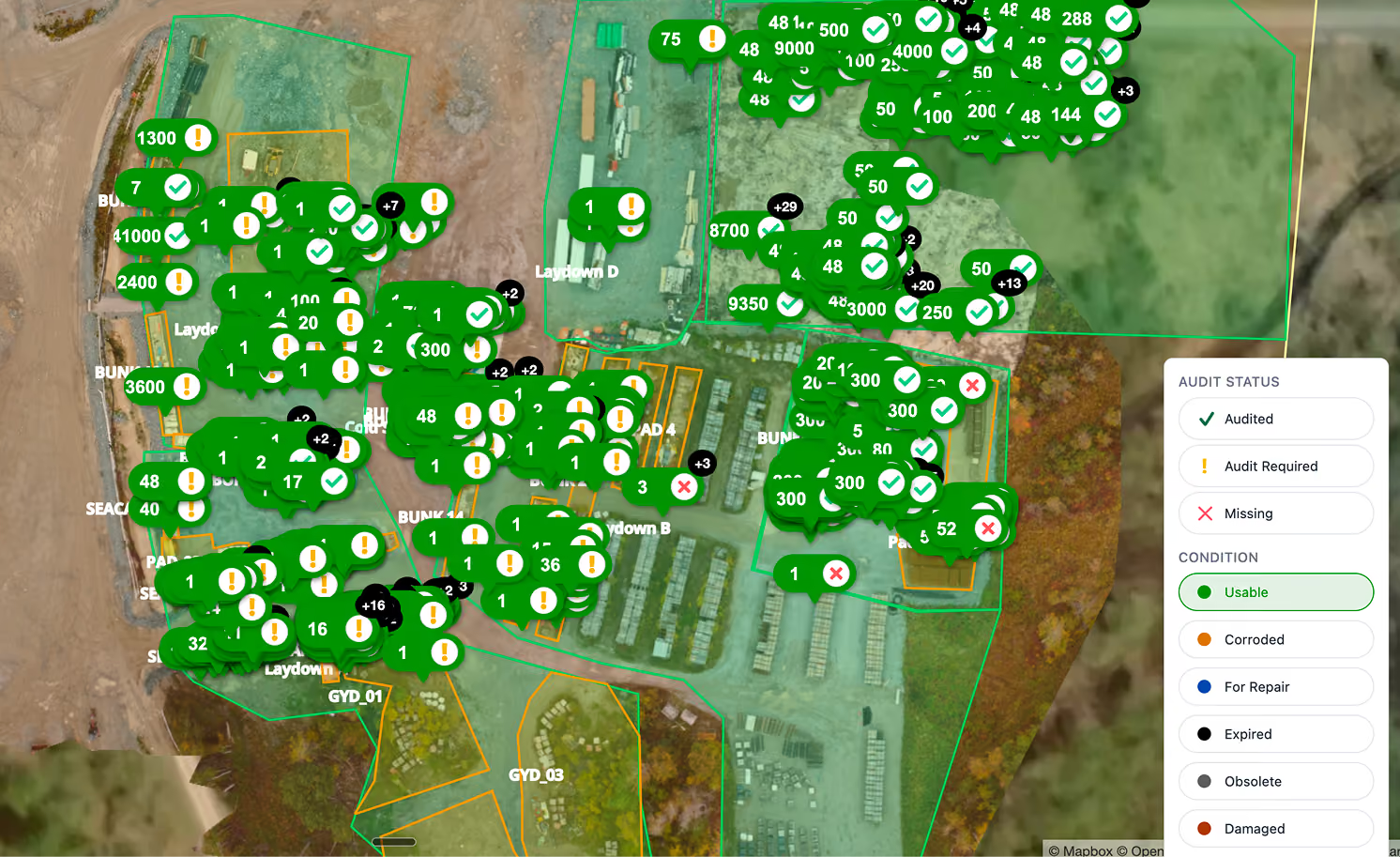
Scatterlink was deployed across two active mine sites without waiting for ERP integration to be complete. Powered by RFID and GPS, the immediate priority was bringing direct-purchased materials under control, giving warehouse, operations, and procurement teams a reliable view of what was physically on site.
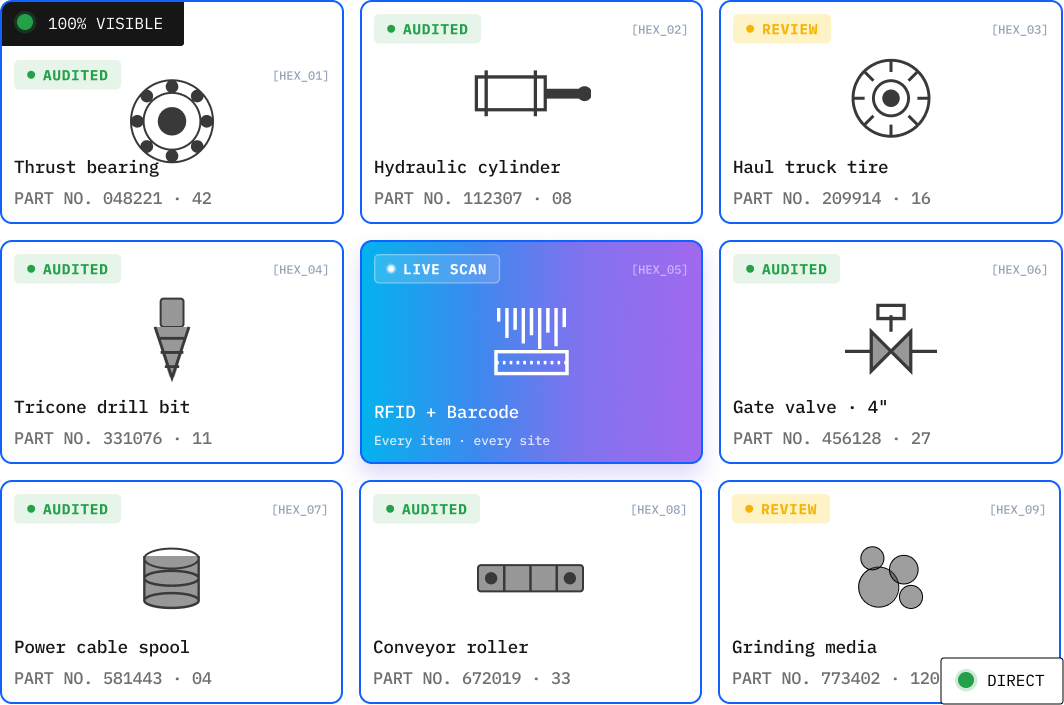
Direct items and historical materials were RFID-tagged, barcode-enabled, photographed, catalogued, and assigned to physical locations. Materials were also standardised using structured classification, including UNSPSC-based categorisation, so teams could search consistently, identify duplicates, and understand what existed across both sites.
Scatterlink reviewed historical purchase order data to identify materials being repeatedly bought through direct channels. More than 1,800 SKUs were flagged as candidates for inventory-code creation, helping the client convert recurring direct purchases into warehouse-managed stock and make purchasing more efficient.
The platform now delivers monthly intelligence that flags items purchased three or more times and recommends them for inventory conversion. Warehouse and procurement teams can act on repeat buying, slow-moving stock, and unmanaged spend without relying on manual analysis or institutional memory.
"Honestly, out of all the dozens of contractors and consultants we've worked with, Scatterlink stands out as the best. I was genuinely surprised by how well it works, practical, simple, and highly effective in the field."
Warehouse Supervisor
Site Team
"Scatterlink brought a level of visibility and simplicity we had been missing for years. Their solution was delivered quickly, exceeded expectations, and created immediate value for our procurement and supply chain teams."
Director, Procurement
Corporate Team
If your operations team is managing inventory through a mix of ERP workarounds, spreadsheets, and institutional knowledge, you are not alone, and you have options.
The working capital tied up in unaccounted stock, the premium paid on emergency purchases, the maintenance hours spent searching rather than working: these are costs that rarely show up as a single line item, but they add up at scale.
Scatterlink's platform is built for the realities of mining operations: remote sites, rugged conditions, high staff turnover, and the kind of complexity that makes off-the-shelf software fall short. It's designed to deliver results in weeks, work with what you already have, and give your leadership team the visibility they need to make sound operational and procurement decisions.
Two mines are live. A third is underway.
%20(1).avif)
.avif)
%20(1).avif)