

Selecting the right inventory tracking technology is a core operational decision for industrial organizations. As facility footprints expand and supply chains grow more complex, maintaining precise, real-time material visibility directly dictates operational uptime and margin control. Whether managing critical spare parts in a mining operation, heavy equipment across active construction sites, or MRO inventory in an oil and gas facility, teams need dependable asset data.
The debate between barcode and radio-frequency identification (RFID) systems comes down to how data is captured, processed, and scaled across harsh environments.
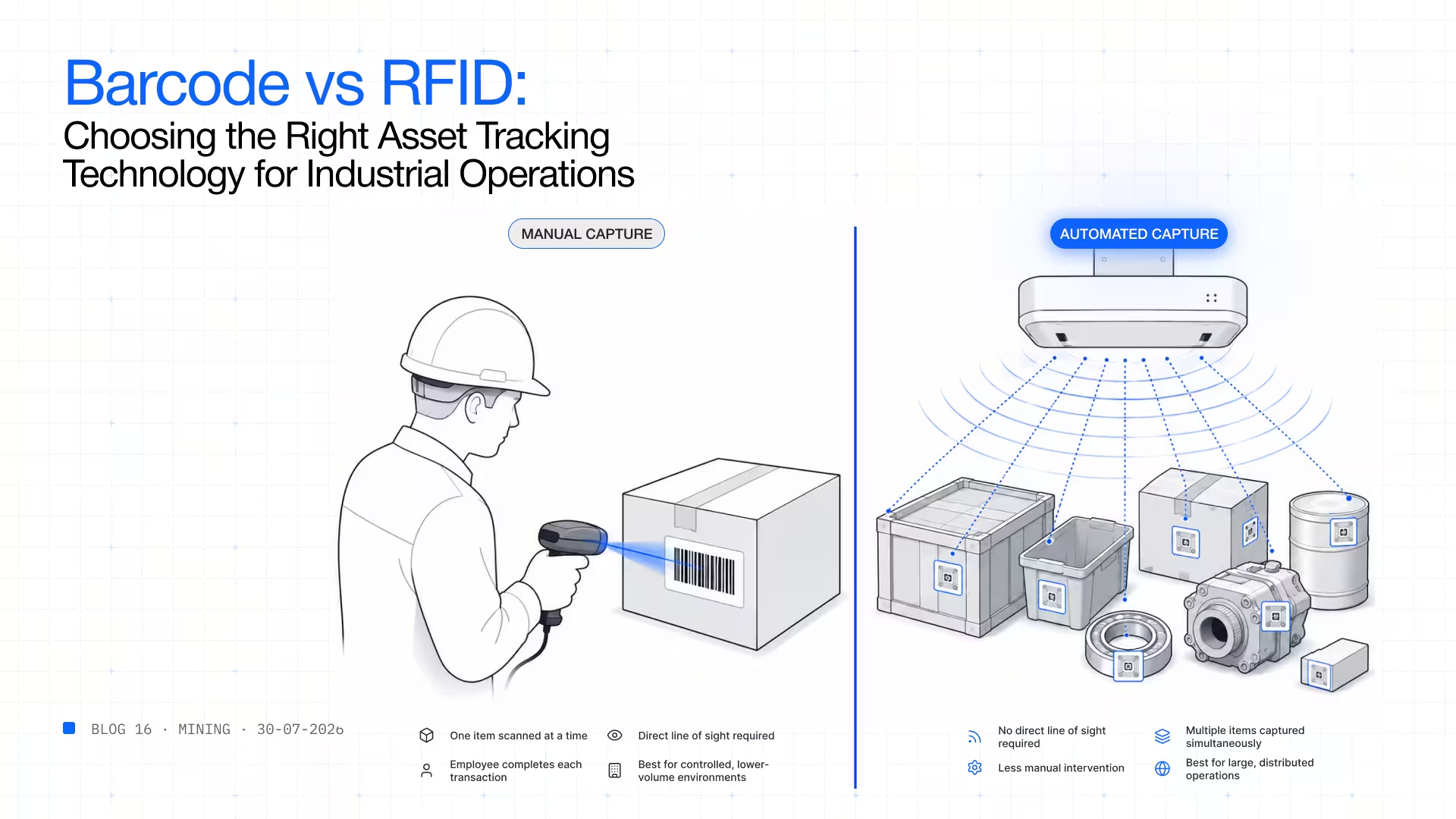
Barcode tracking relies on printed optical labels, ranging from traditional 1D linear codes (e.g., Code 128) to 2D matrix patterns (e.g., Data Matrix, QR codes); to store encoded asset identifiers. Field teams use optical scanners or ruggedized mobile devices to capture label data and push updates directly to an ERP or WMS platform.
Every inventory movement: receiving, staging, transfers, and cycle counts; requires a direct physical scan. Barcode systems excel in controlled, low-to-medium volume environments where low deployment costs outweigh high manual touchpoints.
RFID technology utilizes radio waves to transmit data from microchip-embedded tags to fixed or handheld readers. Unlike optical scanning, RFID operates without a direct line-of-sight, allowing readers to instantly capture data from hundreds of tagged items simultaneously within a designated zone.
RFID, or Radio Frequency Identification, uses radio waves to identify tagged inventory without requiring direct line-of-sight scanning. Instead of reading one barcode at a time, RFID readers communicate with multiple RFID tags simultaneously, capturing inventory information automatically as materials move through operational areas.
This capability significantly changes how organizations manage inventory.
Rather than asking employees to locate and scan every individual item, RFID enables inventory information to be captured automatically, reducing manual effort while improving inventory accuracy. Materials stored on shelves, inside containers, or across large stockyards can often be identified much faster than with traditional barcode systems.
For organizations managing thousands of inventory items across multiple operational sites, RFID provides a level of inventory visibility that barcode technology alone cannot achieve.
Barcode systems continue to be an effective inventory tracking solution for many organizations because they are affordable, widely supported, and relatively easy to implement.
Some of the primary advantages include:
Despite these advantages, barcode systems also have limitations that become more noticeable as operations grow.
Every inventory transaction depends on employees physically scanning each item. If a barcode is damaged, dirty, or inaccessible, inventory cannot be identified until the label is replaced or manually verified. Large inventory counts can therefore become time-consuming, particularly across stockyards, warehouses, and remote industrial sites.
As organizations scale their operations, these manual processes often become the limiting factor rather than the technology itself.
RFID technology was developed to overcome many of the limitations associated with manual barcode scanning.
Because RFID readers communicate using radio frequency signals, inventory can be identified without requiring direct visibility of each tag. Multiple tagged items can be read simultaneously, allowing inventory counts to be completed much faster while reducing manual effort.
For industrial organizations, RFID provides several important advantages:
The primary consideration is cost. RFID infrastructure typically requires readers, antennas, specialized tags, and implementation planning, making the initial investment higher than barcode systems.
However, many organizations recover these costs through reduced labor, fewer inventory discrepancies, improved maintenance productivity, and better inventory visibility.
Ready to transition from manual barcode scanning to automated tracking? Upgrade your facility with our RFID Inventory Management System to scan hundreds of items simultaneously without direct line-of-sight.
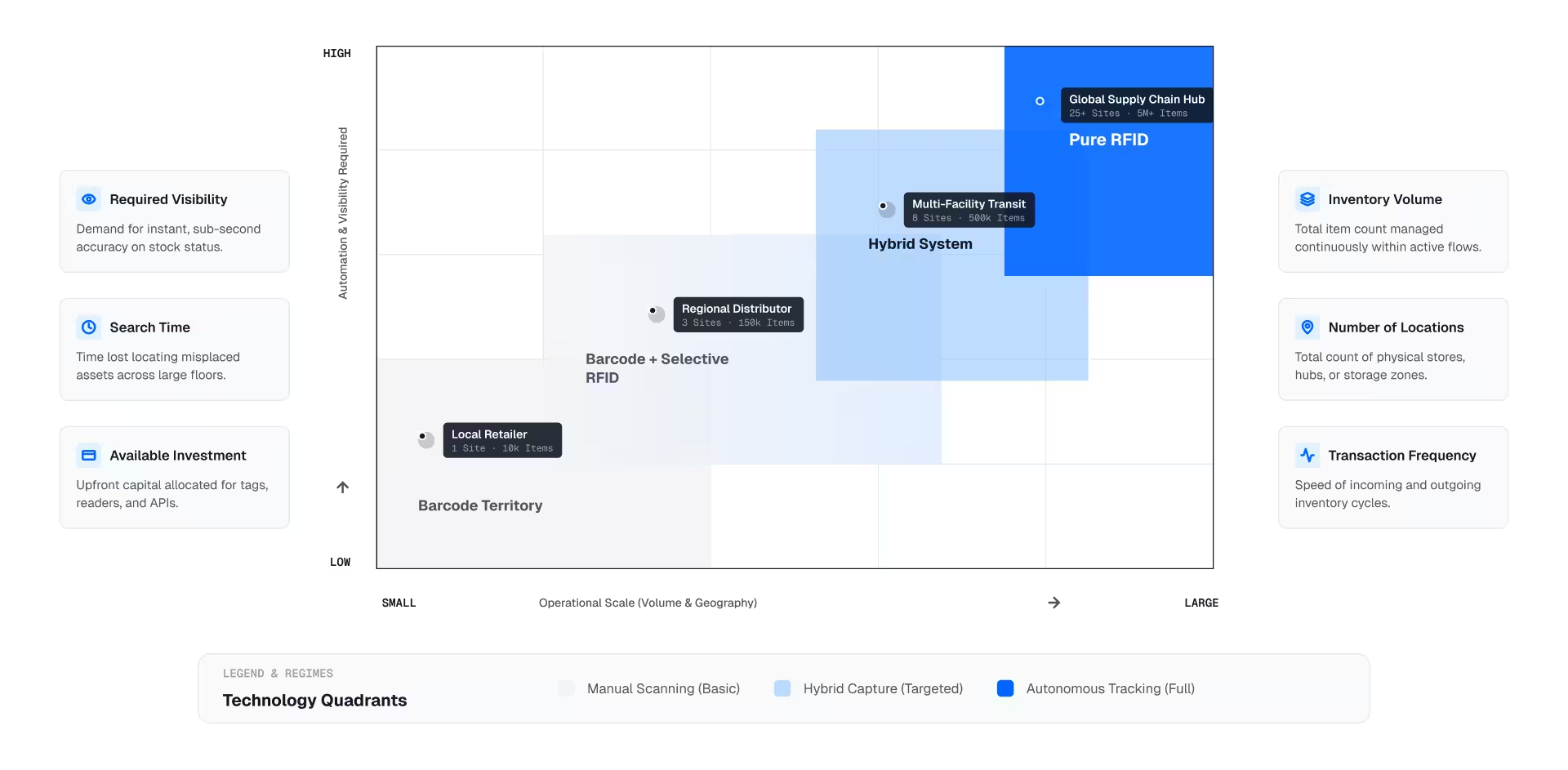
The answer to the barcode vs RFID inventory debate depends on how your organization manages inventory, the scale of your operations, and the level of visibility required.
For organizations operating from a single warehouse with relatively stable inventory movement, barcode systems often provide sufficient functionality. They are straightforward to implement, cost-effective, and capable of supporting routine inventory transactions such as receiving, issuing, and stock counting.
However, industrial operations present a different set of challenges. Mining companies manage inventory across surface stockyards and underground locations. Oil and gas organizations maintain inventory across refineries, drilling sites, warehouses, and remote operational facilities. Construction companies move materials between multiple job sites, while manufacturing businesses continuously track components throughout production.
In these environments, manual scanning becomes increasingly difficult to maintain. As inventory volumes grow and operations become more geographically dispersed, the limitations of barcode systems become more apparent. This is where RFID begins to deliver measurable operational advantages.
Instead of asking employees to locate and scan every inventory item individually, RFID automates much of the inventory capture process, allowing organizations to improve inventory visibility while reducing manual effort.
Despite the growing adoption of RFID, barcode systems continue to be the right solution for many businesses.
Barcode technology is particularly suitable when:
For these organizations, barcode tracking delivers dependable inventory control without requiring significant infrastructure investment.
However, businesses should also consider long-term operational growth. A barcode solution that works effectively today may become increasingly difficult to manage as inventory expands across additional warehouses, remote sites, or field operations.
RFID provides the greatest value when organizations require greater automation, faster inventory verification, and improved operational visibility.
Industries managing thousands of inventory items across large operational areas frequently struggle with manual inventory processes. Employees spend considerable time searching for materials, completing inventory counts, and verifying inventory before maintenance or production can begin.
RFID addresses these challenges by reducing manual intervention and enabling inventory information to be captured automatically.
Organizations often achieve the strongest return on investment from RFID when they need to:
For asset-intensive industries, these operational improvements often outweigh the higher initial investment associated with RFID implementation.
One of the biggest misconceptions surrounding barcode vs RFID inventory is that organizations must choose one technology exclusively.
In reality, many successful inventory strategies combine both.
For example, an organization may continue using barcode labels for lower-value consumables while deploying RFID for high-value spare parts, maintenance inventory, or inventory stored across large outdoor stockyards. Warehouse personnel continue using familiar barcode workflows where appropriate, while RFID provides automated visibility for inventory that is more difficult to manage manually.
This hybrid approach allows organizations to maximize existing investments while gradually expanding RFID capabilities as operational requirements evolve.
Rather than replacing barcode systems overnight, businesses can implement RFID strategically where it delivers the greatest operational value.
Eliminate manual scanning bottlenecks and unlock complete operational control with Scatterlink.
Inventory visibility should never be limited by the technology an organization chooses.
Scatterlink's Inventory Intelligence Platform is designed to support barcode and RFID technologies within a single, integrated inventory management solution. This allows organizations to implement the technology that best aligns with their operational requirements while maintaining a consistent inventory management process.
Using mobile inventory applications, RFID readers, barcode scanning, IoT devices, GPS-enabled location tracking, and seamless ERP integration, Scatterlink provides real-time visibility into inventory movement from receipt to consumption. Whether inventory is located in warehouses, laydown yards, maintenance workshops, surface mining operations, or underground environments, teams have access to accurate, intelligent, and actionable inventory information.
Scatterlink also enables organizations to adopt technology at their own pace. Businesses can begin with barcode tracking, introduce RFID where operational complexity demands greater automation, or deploy a hybrid solution from the outset. Because the platform supports both technologies, organizations are not forced into costly system replacements as their inventory management strategy evolves.
The platform is built for frontline users, requiring minimal training while fitting naturally into existing operational workflows. Employees spend less time completing manual inventory tasks and more time performing productive work, while leadership gains the visibility needed to make faster, data-driven decisions.
Struggling with slow scan times and missed inventory entries during peak hours? Discover how automated RFID capture can accelerate your operations.
The barcode vs RFID inventory decision is not about determining which technology is universally better. It is about identifying the solution that best supports your operational objectives.
Barcode systems remain a reliable and cost-effective choice for organizations with simpler inventory environments and lower operational complexity. They provide dependable inventory control where manual scanning is practical and inventory volumes are manageable.
RFID, on the other hand, enables organizations to move beyond manual inventory tracking. By automating inventory capture and improving real-time visibility, RFID helps reduce inventory search time, improve inventory accuracy, and support faster operational decision-making across complex industrial environments.
For many asset-intensive businesses, the most effective strategy is not choosing barcode or RFID, but combining both technologies within a unified inventory intelligence platform. This approach allows organizations to improve operational efficiency today while building a scalable foundation for future growth.
The main difference between barcode vs RFID inventory is that barcode systems require line-of-sight scanning of individual items, while RFID uses radio waves to identify multiple tagged items simultaneously without direct line of sight.
RFID is generally better for organizations managing large inventories across multiple locations because it provides faster inventory counts, improved inventory visibility, and reduced manual scanning. Barcode systems remain effective for smaller or less complex operations.
Mining, oil and gas, manufacturing, utilities, logistics, construction, and other asset-intensive industries benefit significantly from RFID because they manage large volumes of inventory across extensive operational areas.
Yes. Many organizations implement hybrid inventory tracking strategies that use barcode systems for lower-value inventory and RFID for high-value assets or inventory requiring greater visibility.
The right choice depends on inventory volume, operational complexity, budget, visibility requirements, and long-term business objectives. Many organizations begin with barcode systems and expand to RFID as operations grow.
RFID inventory management uses radio frequency identification (RFID) technology to automatically identify, locate, and track inventory throughout its lifecycle. Compared to manual inventory processes and barcode-only systems, RFID provides faster inventory counts, improved inventory accuracy, and real-time visibility across warehouses, stockyards, field locations, and industrial operations.
RFID asset tracking software helps organizations monitor inventory and equipment in real time by combining RFID tags, readers, mobile applications, and centralized inventory intelligence. It reduces manual data entry, shortens inventory search time, improves inventory accuracy, and provides complete visibility across multiple operational locations.
Mining operations manage inventory across warehouses, stockyards, sea cans, laydown yards, workshops, field locations, and underground environments. Purpose-built asset tracking software for mining, mining asset tracking platforms, and mining equipment tracking systems provide real-time visibility, offline mobile capability, and RFID-based tracking that traditional warehouse management systems are not designed to support.
%20(1).avif)
.avif)
%20(1).avif)